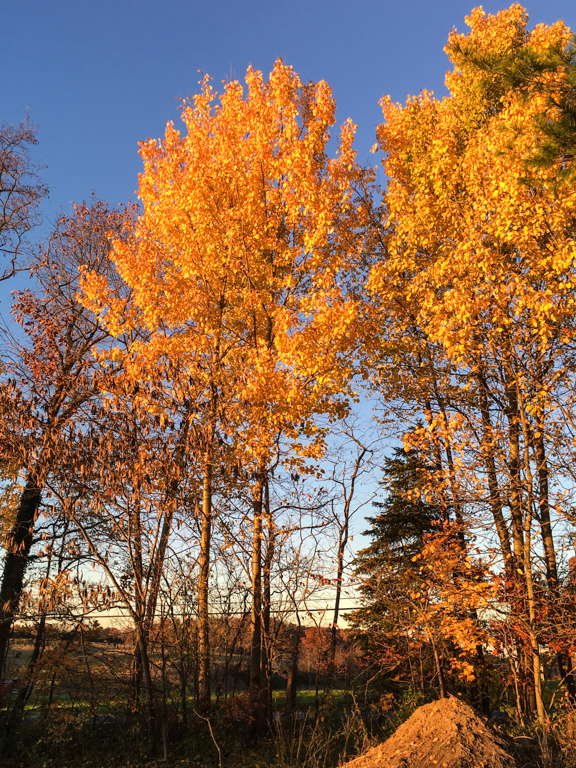
Big-Tooth Aspens
It’s been a wonderful fall here in Maryland. Sunny days, cool nights, and no hard frost yet. That has allowed some of the flowers to pretend that it is spring. In particular, one of the Camellia japonica hybrids often gets a jump on the season.

Camellia japonica ‘Spring’s Promise’
Last year a lot of the Camellias got blasted going through the winter. I have hopes for a better showing this spring.
Another early showing is the small Daphne at the foot of the garage.

Daphne x ‘Lawrence Crocker’
This one, like many Daphnes, has a wonderful fragrance.
I was surprised to find a Bottle Gentian that had self-seeded in the garden quite about 20 feet away from the nearest source.
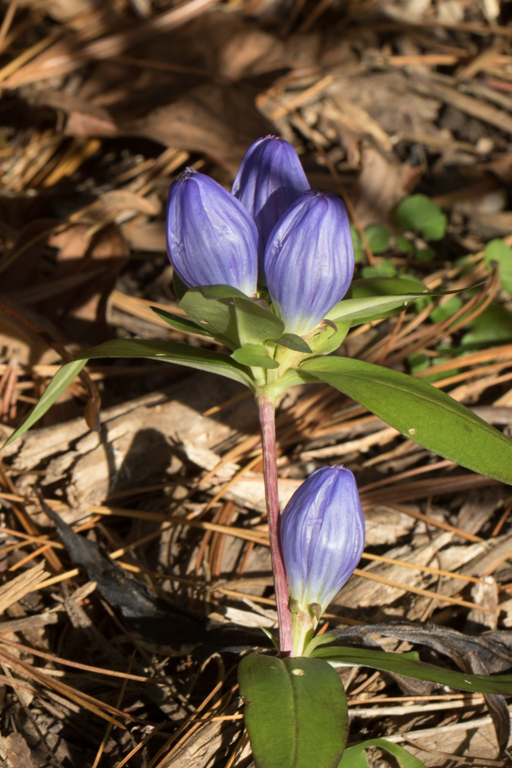
Bottle Gentian seedling (Gentiana andrewsii)
I’m not as fond of the Bottle Gentians as I keep waiting for them to open there buds, which never happens. But most any flower is welcome at this season.
I need to give credit to the little Wallflower that basically blooms the whole year.

Western Wallflower (Erysimum capitatum) I think
Tricyrtis also have an extensive bloom time, just about the whole fall season. Beth found that they also make a nice cut flower.
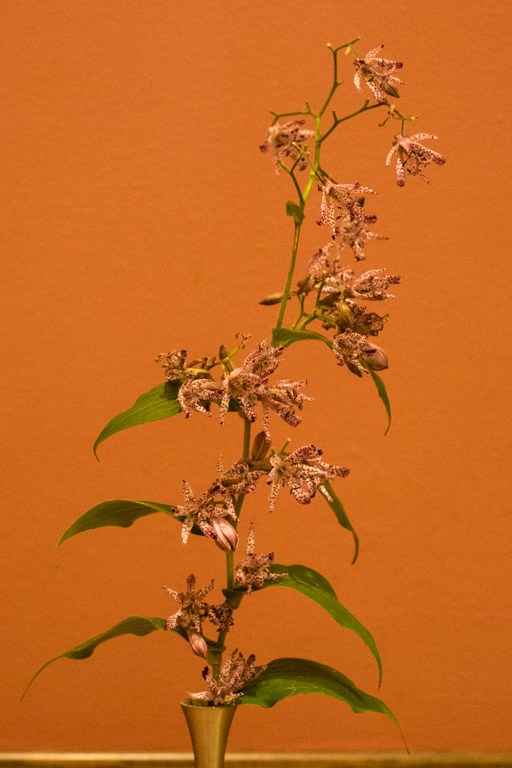
Tricyrtis ‘Sinonome’ in Vase
I was particularly delighted with the Fall Crocus this year. ‘Conquerer’ is still in bloom for us.

Crocus speciosus ‘Conqueror’

Crocus cartwrightianus ‘Albus’
Make a mental note that we need more Fall Crocus next year. I interplanted them in the grass with Ajuga and Starflowers. It looks like they all get on fine together.
I can’t resist showing more of the many Oxalis that are blooming in the greenhouse right now. In this case I’m choosing the semi-folded stage before they fully open for the day.

Oxalis purpurea ‘Cherry’
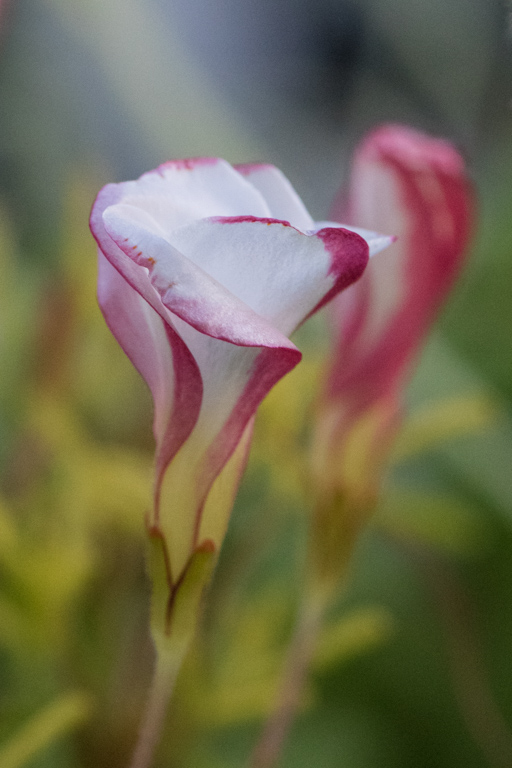
Oxalis versicolor

Oxalis callosa
So this the state of affairs in mid-November for Garden Blogger’s Bloom Day. I’ll close with a sunset from the back pasture.

Autumn Sunset on Ball Rd
Oxalis in Motion

Oxalis asinia
Oxalis species have wonderful variety in both flowers and foliage. There are more than 800 species altogether, most from South Africa. One of the characteristics that I’ve seen in most of the varieties that I’ve grown is a strong responsiveness to light. Both flowers and leaves can be responsive to light, but the unfolding and refolding of the flowers is particularly lovely to watch. Rather than just opening and closing they actually twist at the same time so that when closed they take on the aspect of a very tight cylinder.

Oxalis asinia wrapped
To illustrate the process I made a time-lapse video of Oxalis purpurea ‘Skar’ over a 4 hour period one morning in the dining room.
httpv://vimeo.com/145508167
The flowers come to life as they greet the sun each day. Notice the untwisting.
Here are some of the other Oxalis that we are enjoying right now.

Oxalis pardalis

Oxalis cathera

Oxalis purpea ‘Lavender & White’

Oxalis polyphylla var. heptaphylla
If you are interested in Oxalis I suggest a visit to Telos Rare Bulbs. Diana Chapman, the proprietor, has an exquisite collection of Oxalis (among many other bulbs).
Another south african that is fully open right now is Polyxena ensifolia.
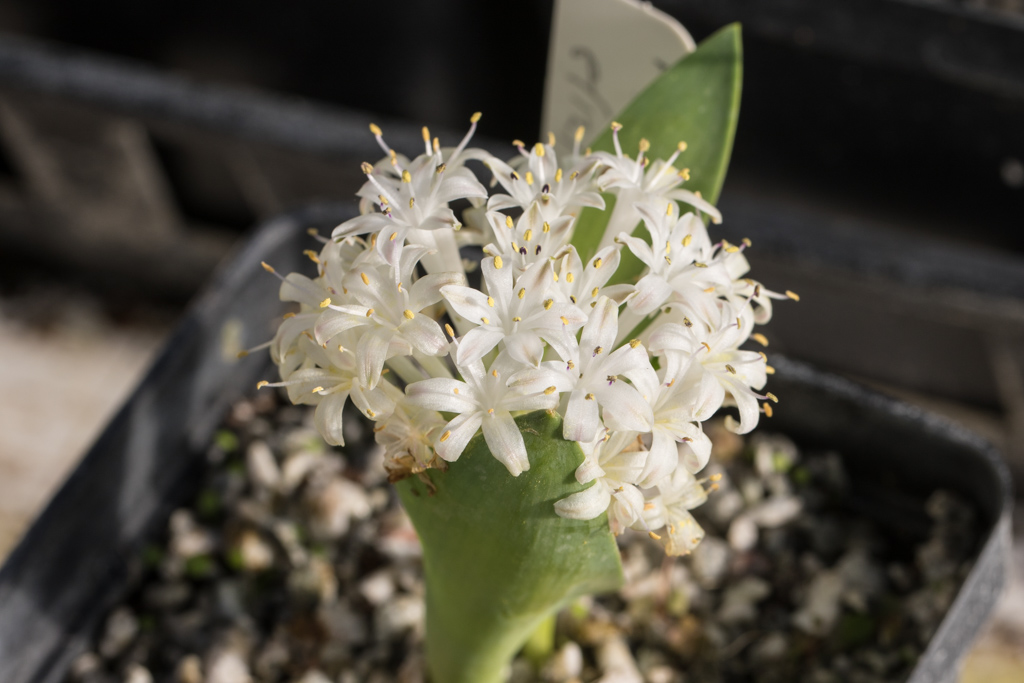
Polyxena ensifolia
So many buds packed into a very tight space.
One other item to mention today is the arrival of Daubyena stylosa. When we were visitng the Brooklyn Botanic Garden last Thanksgiving I noticed a marvelous Daubyena Stylosa plant in full flower. It was the first I had ever seen of that species. However I had just that august planted a few seedlings that I had obtained from a Pacific Bulb Society exchange. And now the first flowers have arrived on one of those seedlings.

Daubenya stylosa
Garden Blogger’s Bloom Day October 2015
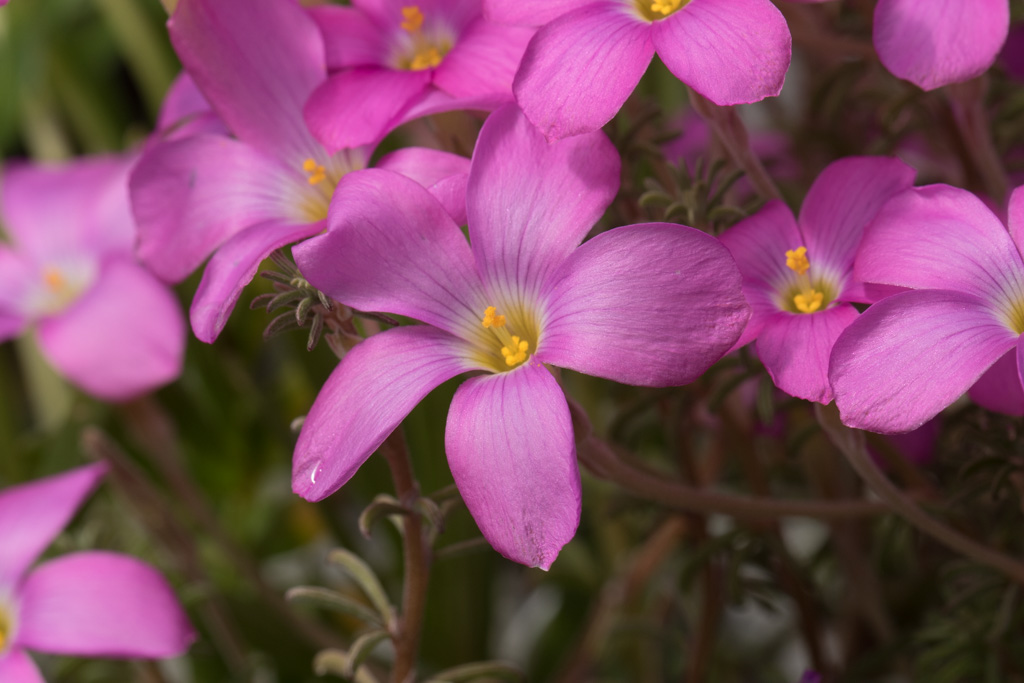
Oxalis hirta ‘Gothenburg’
Well it’s Garden Blogger’s Bloom Day and the flowering for October is fairly predictable. Toad lilies, Japanese Anemone’s, annuals in the garden and the Oxalis are all coming into flower in the greenhouse. They get planted in late August and they come into flower very rapidly. And one of the earliest and most prolific is Oxalis hirta ‘Gothenburg’

Oxalis hirta ‘Gothenburg’ in quantity
Some other Oxalis examples are
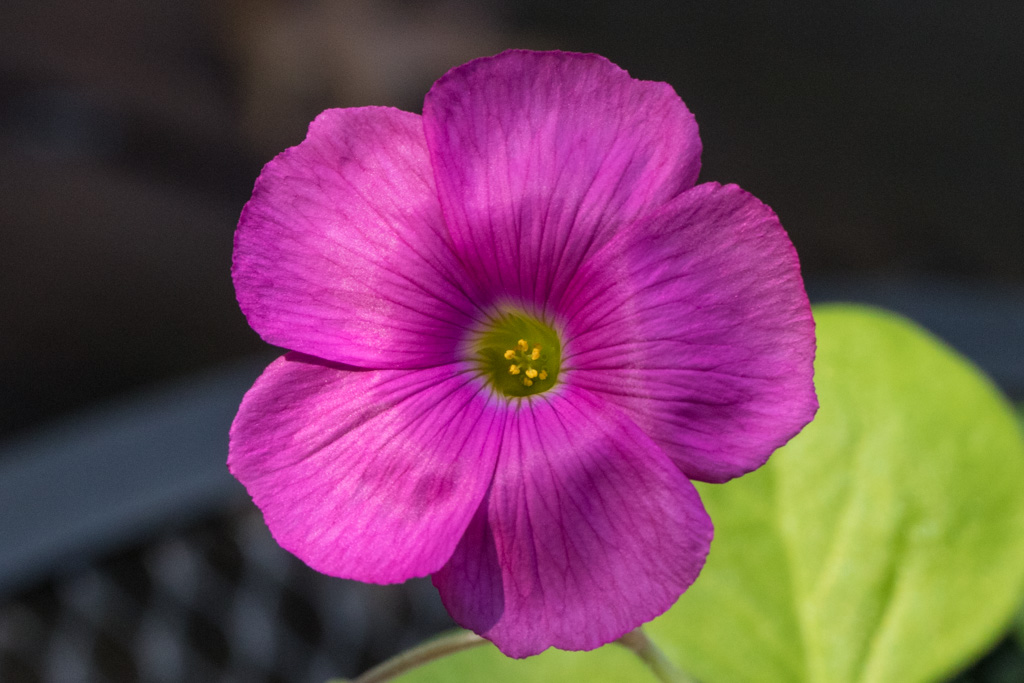
Oxalis bowieii
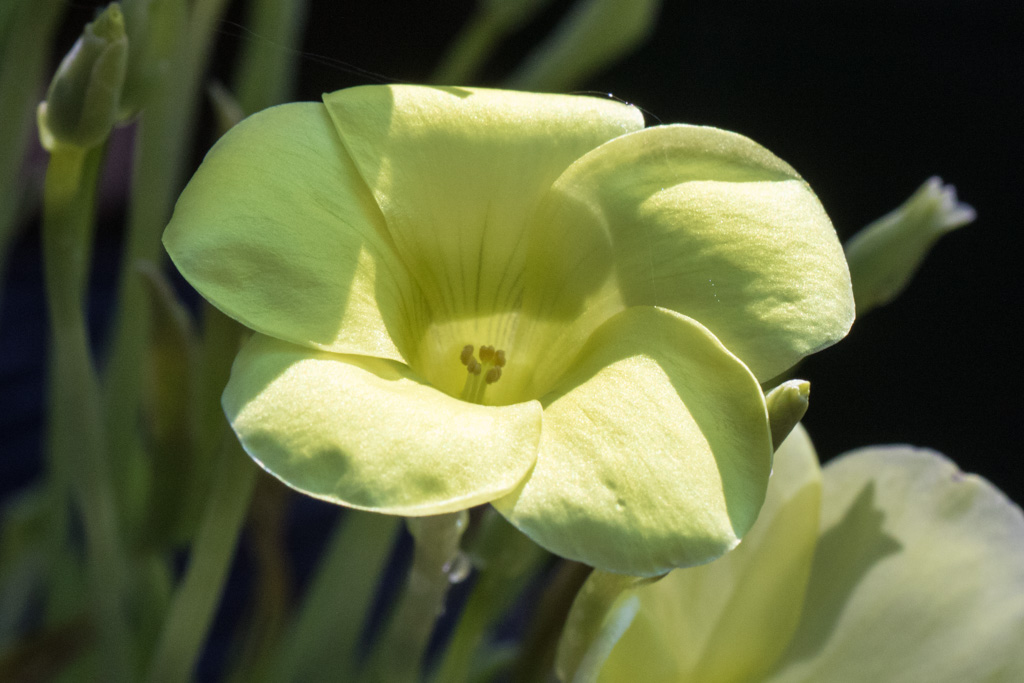
Oxalis fabifolia
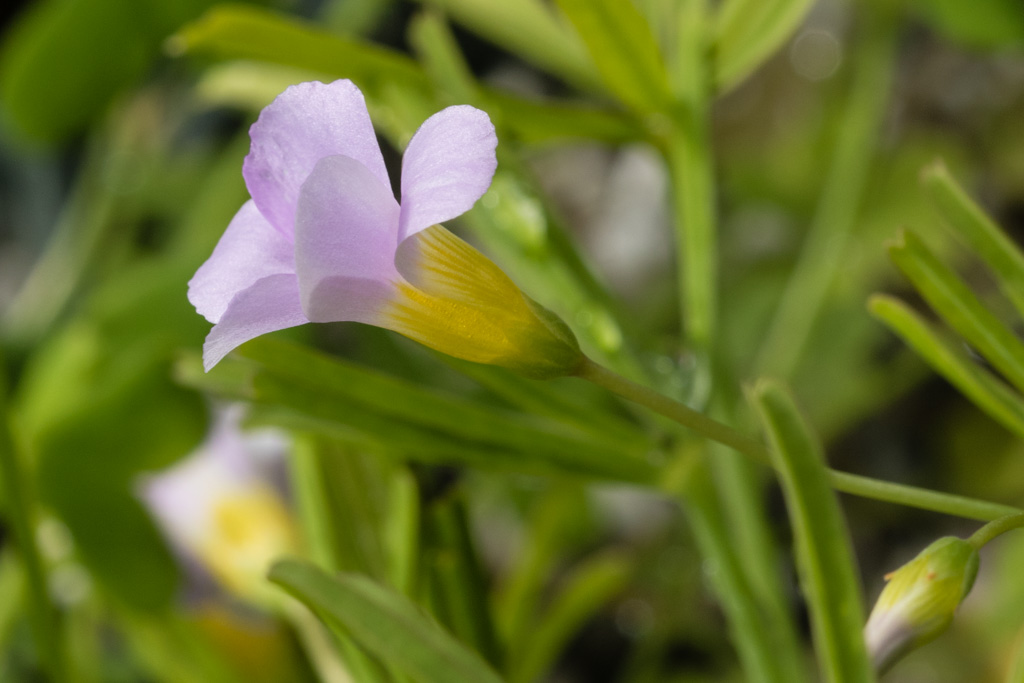
Oxalis caprina
Out in the yard a new Colchicum that we’ve added is ‘Dick Trotter’

Colchicum ‘Dick Trotter’
For the first time we’ve got flowers on the new Mahonia that we added this spring.

Mahonia confusa ‘Narihira’
I’ve got high hopes that this soft foliaged Mahonia will make it over the winter.
Also in the monument bed is a lovely little Saxifrage that I received as a gift this winter.

Saxifraga fortunei ‘Select’
Also a single flower shows on the St. John’s Wort this week.

Hypericum ‘Hidcote’
As I mentioned the toad lilies continue to put on a show. Especially productive is the Tricyrtis ‘Sinonome’
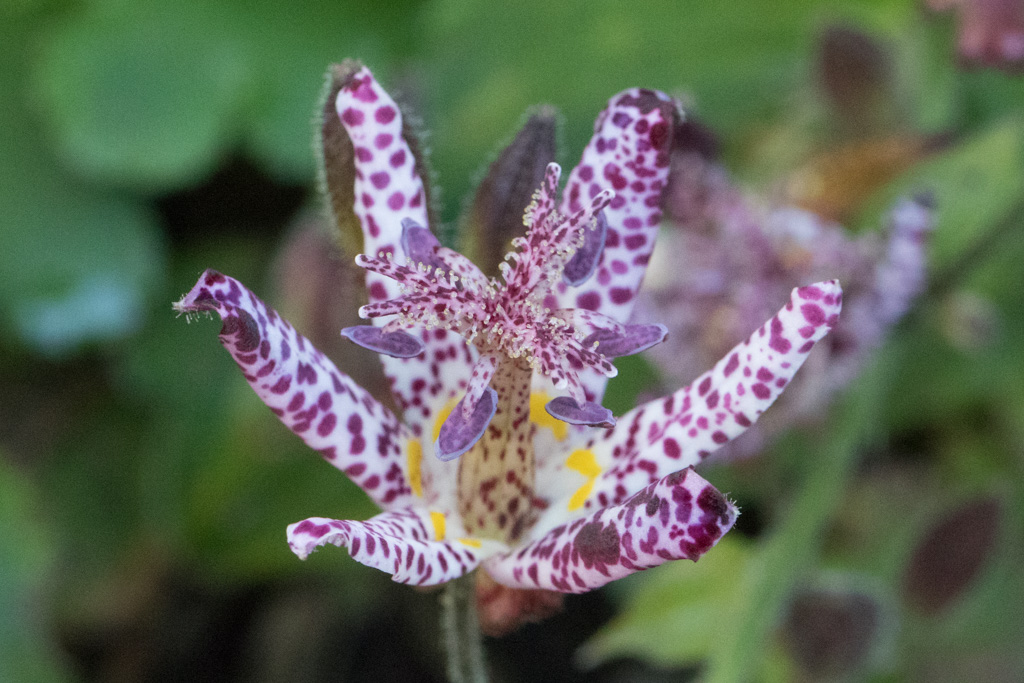
Tricyrtis ‘Sinonome’
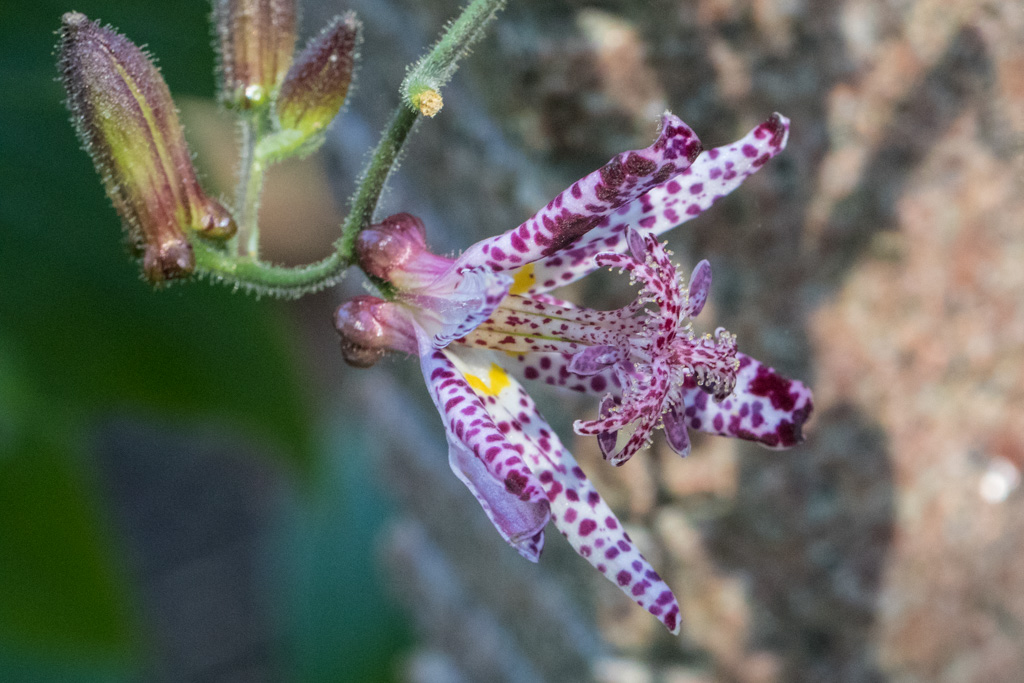
Tricyrtis ‘Sinonome’ in profile
These are some of the highlights in our garden. I hope yours is also filled with delights.
Garden Blogger’s Bloom Day September 2015
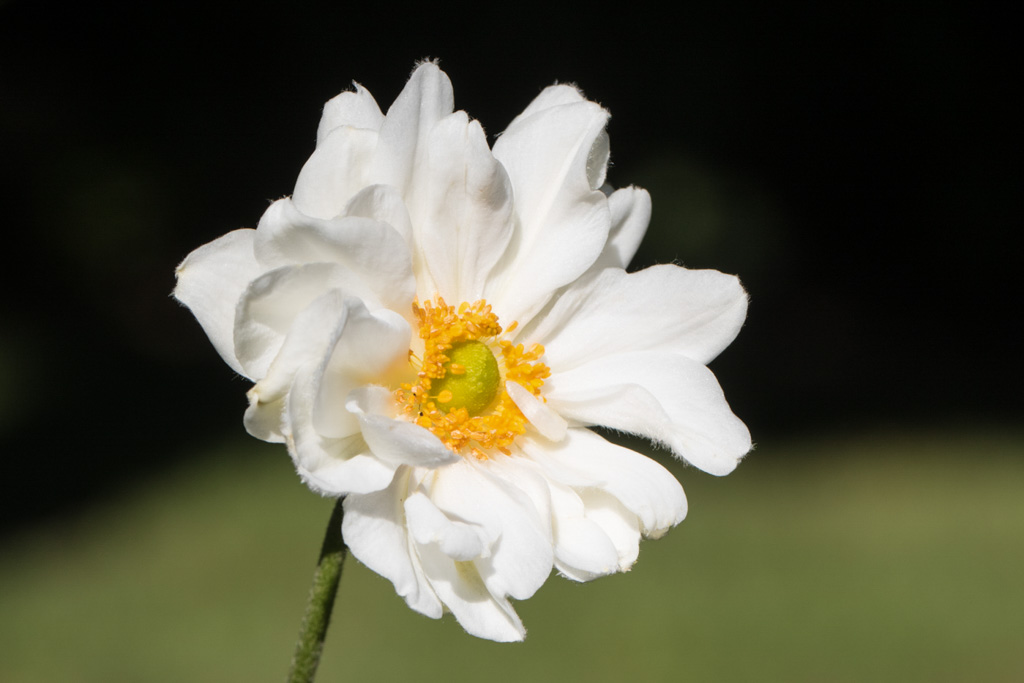
Japanese Anemone ‘Whirwind’
It is Garden Blogger’s Bloom Day and I am late in posting once again. I found myself on the road once more but these are photos from the garden reflecting the state of affairs before I left. One of the standout flowers for this time of year is the lovely double flowered Japanese anemone pictured above. It is both floriferous and singularly beautiful over a long period in the fall.
Another set of flowers that can be counted on for September are the Toad Lilies.

Tricyrtis ‘Tojen’
There are several in the yard now but they are all characterized by orchid like blossoms and delightful green foliage with rampant growth.
One of our favorite dahlias for use in the perennial gardens is Bishop of Llandalf.
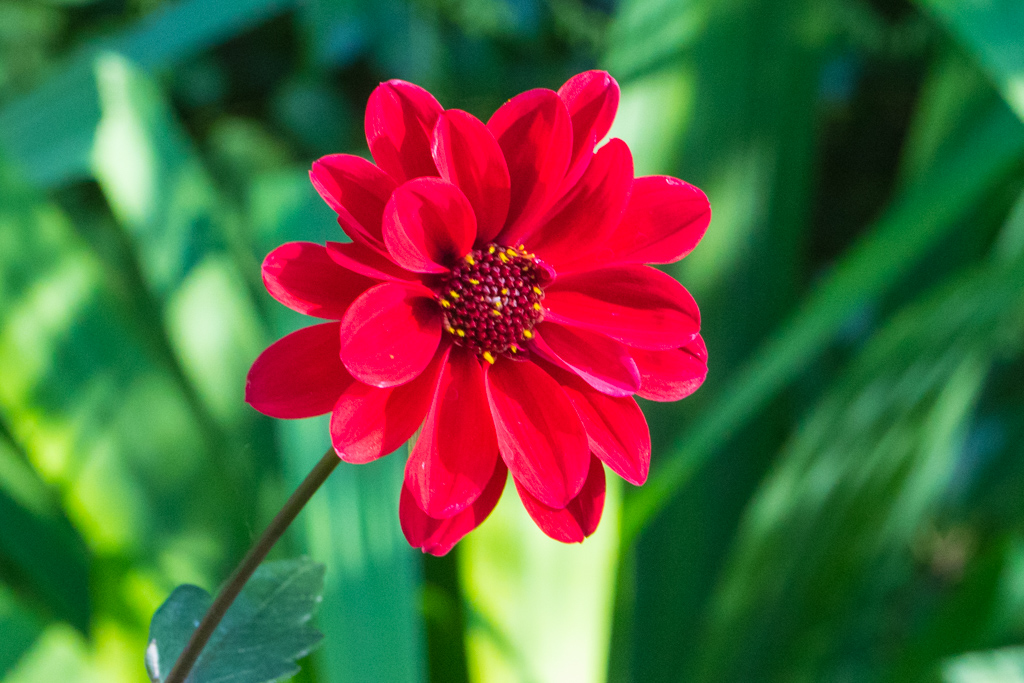
Bishop of Llandalf
It’s dark foliage contrasts nicely with the other plants and the red flowers are outstanding.
We have several patches of Garlic Chives that are expanding.

Garlic Chives (Allium tuberosum)
They are especially nice when many other perennial flowers have faded.
In the annual cutting bed the Tithonia continue to dominate.

Tithonia
They are constantly visited by butterflies and bees.

Butterfly on Tithonia
In the wildflower patch in the lawn we have some Colchicum established.
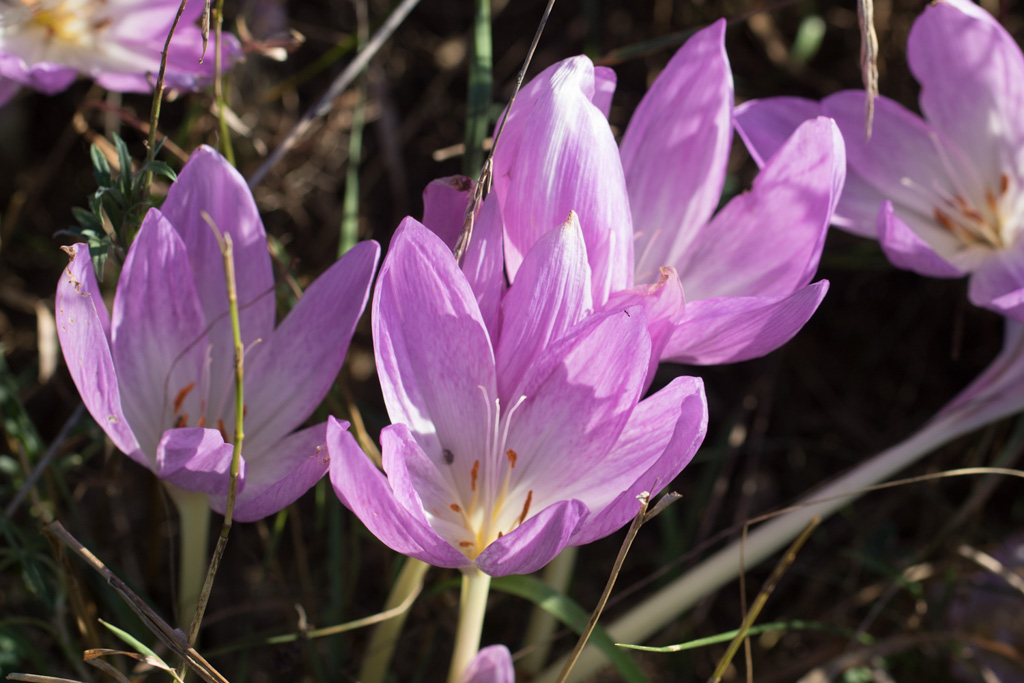
Colchicum ‘Byzantium’
One of the nice aspects of species peonies is the rather striking seed pods they can have in the fall.

Peony Seeds
This one is Paonia obovata I believe. The red seeds are not viable but the black ones could easily be harvested.
It’s also worth noting that this year promises a very nice apple crop, probably more than we can eat….

Mutsu Apples
Nice Note from NARGS and an Opportunity

Adonis amurensis ‘Chichibu Beni’
I got a nice note today from Malcolm McGregor who is the editor of the North American Rock Garden Society journal the ‘Rock Garden Quarterly’. His message was that the above picture of an Adonis from last winter was selected as the the Joint Winner of Class 5 (Close up) in their annual photo contest. At the same time he said that my photo of a Gymnospermium albertii was given a Highly Commended rating in a different class.
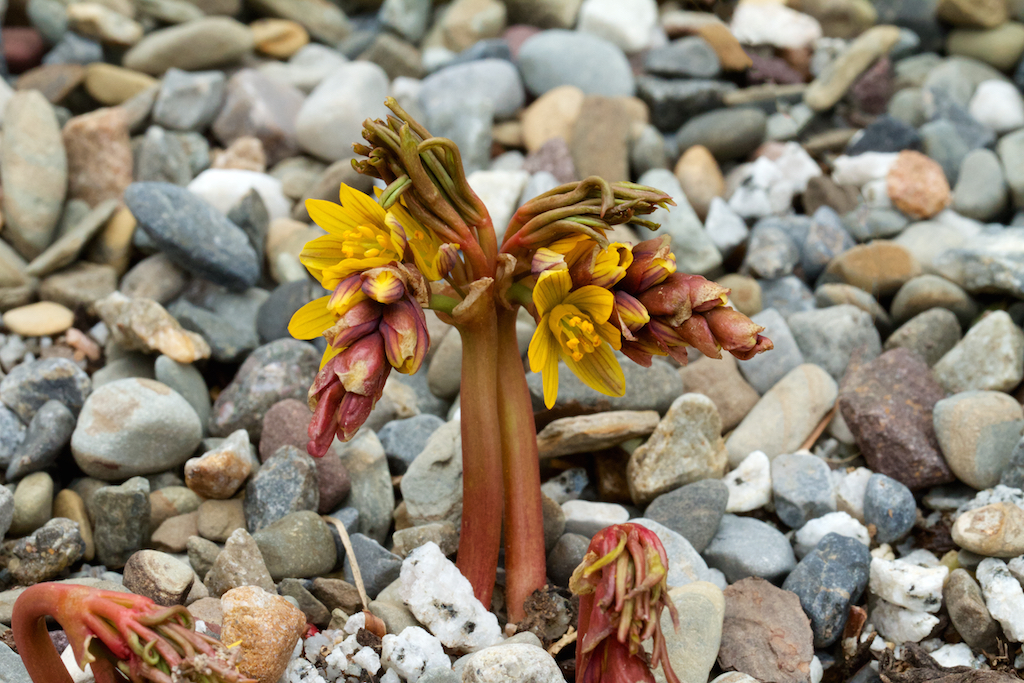
Gymnospermium albertii
As a class winner, I am entitled to give a free annual membership to NARGS to the person of my choosing. If you are harboring an interest in rock garden plants but have not yet taken the plunge, let me know, and if it’s not already been given away, I’ll be happy to give you this opportunity. Personally I have found the whole NARGS experience — growing plants, exchanging seeds, and reading the excellent journal articles — to be very fulfilling.
Meanwhile, here is the latest little Zephyranthes in the greenhouse to usher in the fall season

Zephyranthes smallii
Garden Blogger’s Bloom Day August 2015
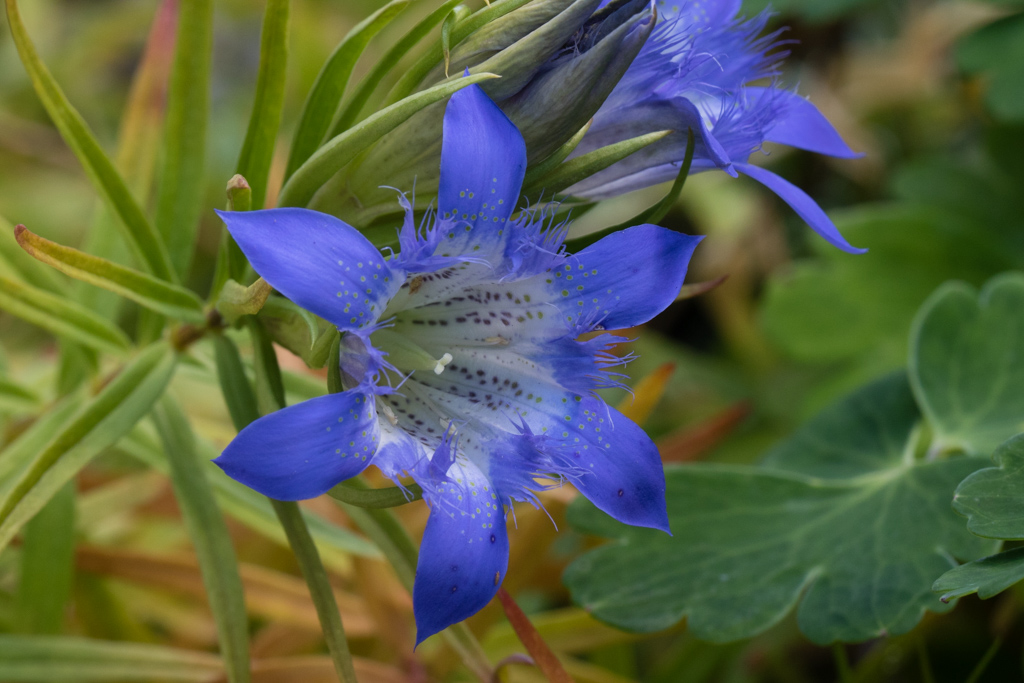
Gentiana paradoxa
Well I have very mixed feelings for this Garden Blogger’s Bloom Day. There are a few flowers like the beautiful gentians in the alpine bed. But it is also the dog days of August with over a week since the last rain and no rain in the immediate future. On top of that we returned from vacationing on Cape Cod to find that the water pump had stopped a week ago and all the elaborate water timing I had set up was a total fail. It was bad enough for the outdoor plants surviving the drought-like conditions, but the worst casualty was the greenhouse. With no water the greenhouse becomes an oven. I can’t even bear posting the picture of what the greenhouse looks like. The bulb things will survive but the alpine seedlings that were painstakingly started this year were devastated. Focusing on the positive, there is a splendid Cyrtanthus hybrid which found the desert-like conditions just to its liking.
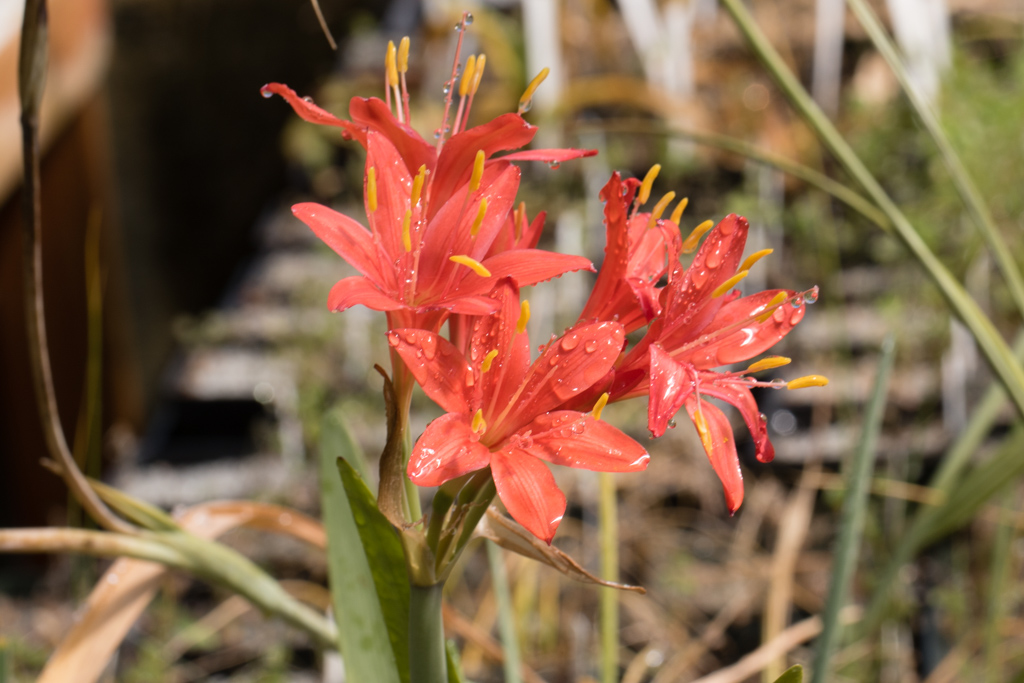
Cyrtanthus elatus x montanus
Another little bulb in flower right now is a Barnardia from Japan.

Barnardia japonica
Out in the very dry yard, the first thing that strikes you as it hangs over the porch is a lovely Limelight Hydrangea.
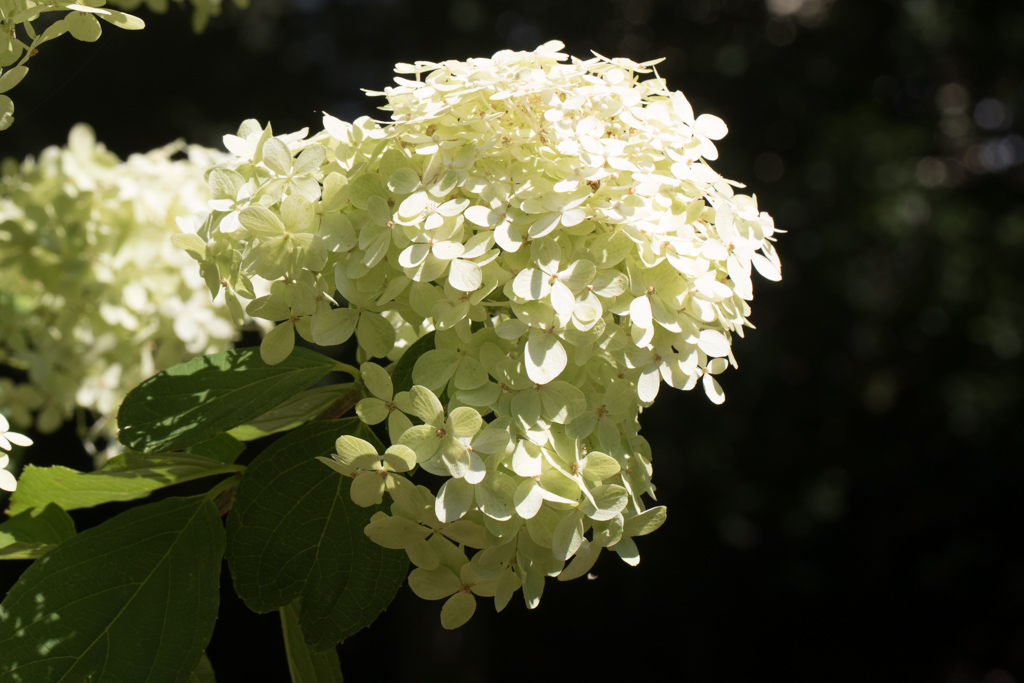
Hydrangea ‘Limelight’
In the perennial beds there are two very striking lobelias that capture one’s attention.
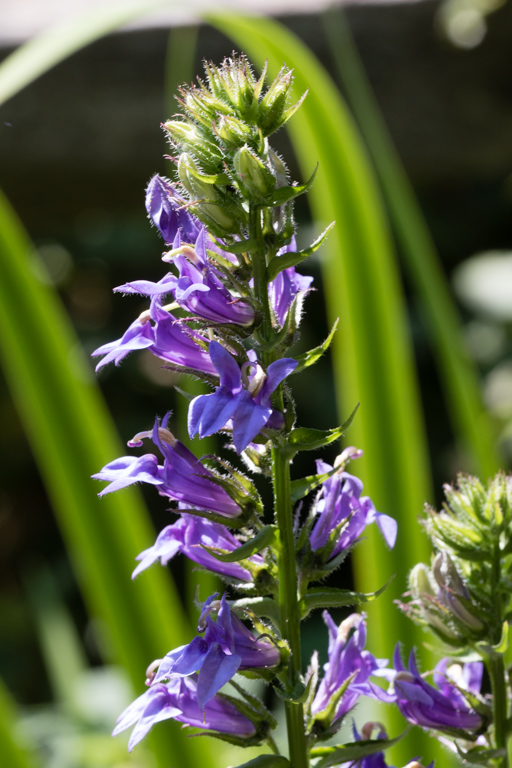
Great Blue Lobelia (Lobelia siphilitica)

Lobelia x speciosa (Compliment Deep Red)
This one was brought up from Plant Delights this spring.
There is also a cute little Rosularia from Wrightman Alpines that I noticed flowering on one of the pieces of tufa.

Rosularia sedoides
There are lots of annuals that give us picking flowers for inside the house. I noticed a clearwing moth hanging on one of the verbenas.

Clearwing Moth on Verbena
For the annual flowers in the garden the Mexican Sunflowers have totally dominated over the zinnias, marigolds, cosmos, etc.
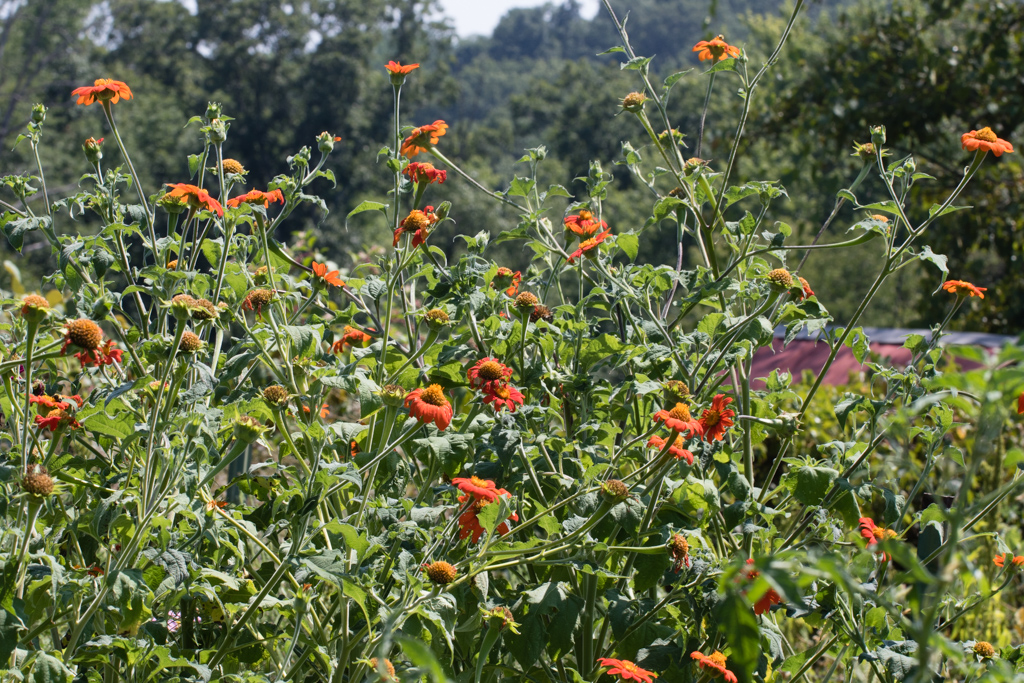
Tithonia dominating annuals
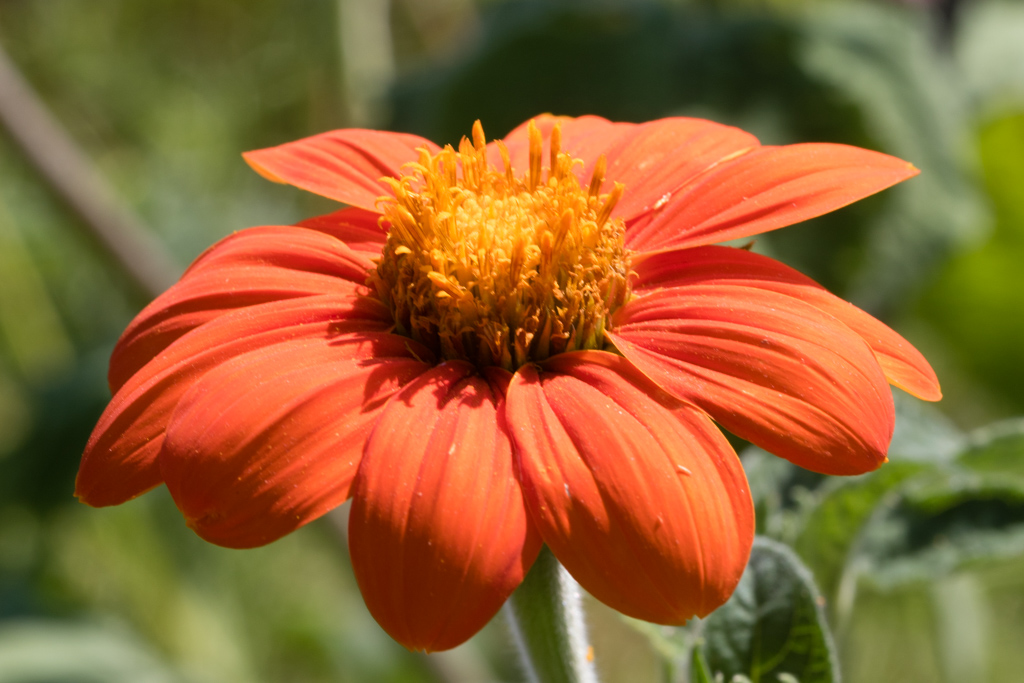
Mexican Sunflower (Tithonia rotundifolia)
Garden Blogger’s Bloom Day July 2015

Anastasia en masse
We returned from our trip to the Dolomites to find that there had been pretty constant rainfall while we were gone (and that has continued). The temperatures have also stayed 5-10 degrees below normal. This meant that we had a LOT of mowing a weed pulling to do, but we also didn’t have to waste a lot of time dragging hoses around the yard. The lilies were in full bloom. It is marvelous to walk out in the yard and get knocked over by the lily fragrance.
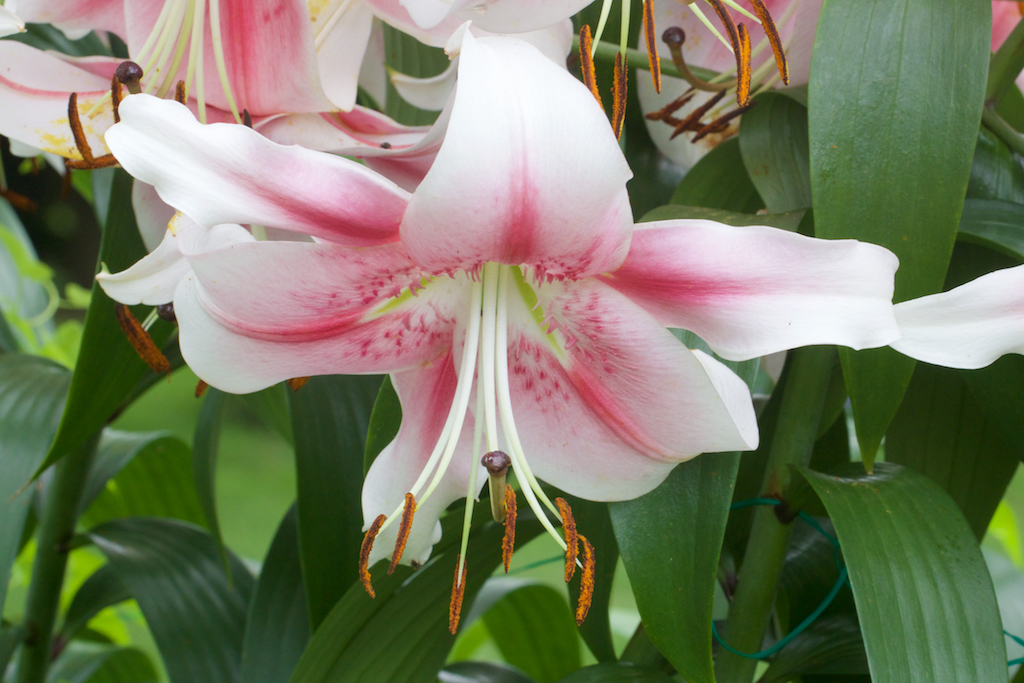
Orienpet Lily ‘Anastasia’
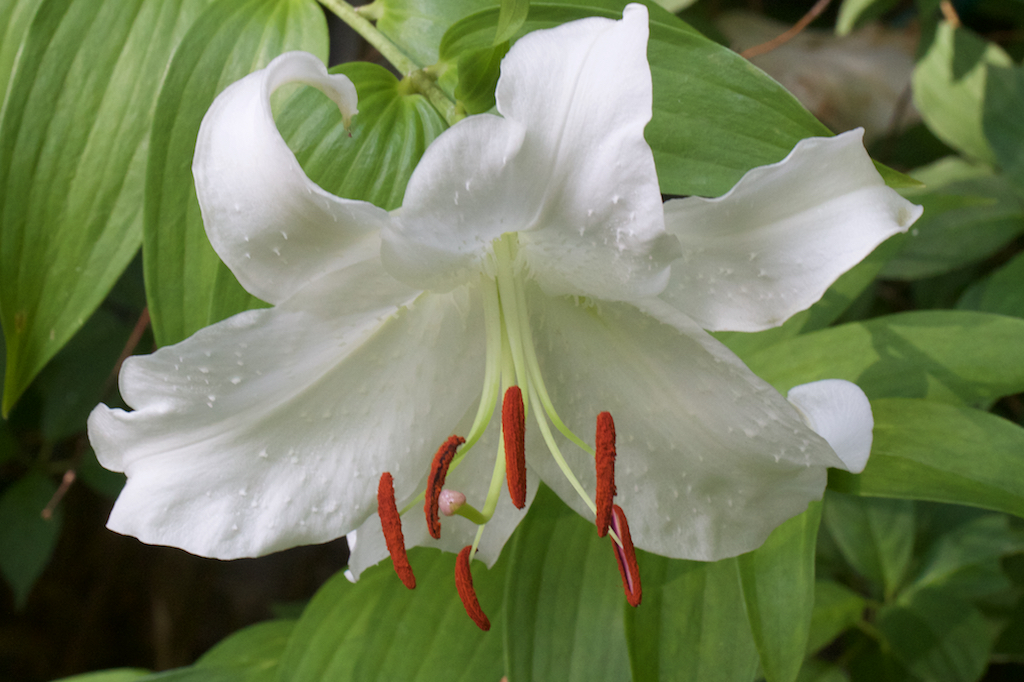
Oriental Lily ‘Casablanca’

Oriental lily ‘Time Out’

Trumpet Lily ‘Lady Alice

Lilium ‘Pink Perfection’
Besides other lily varieties there are also the day lilies blooming in gay profusion right now.

Daylilly ‘Apollodorus’
Many annuals are also happening right now but of a couple of perennial standouts are as follows:
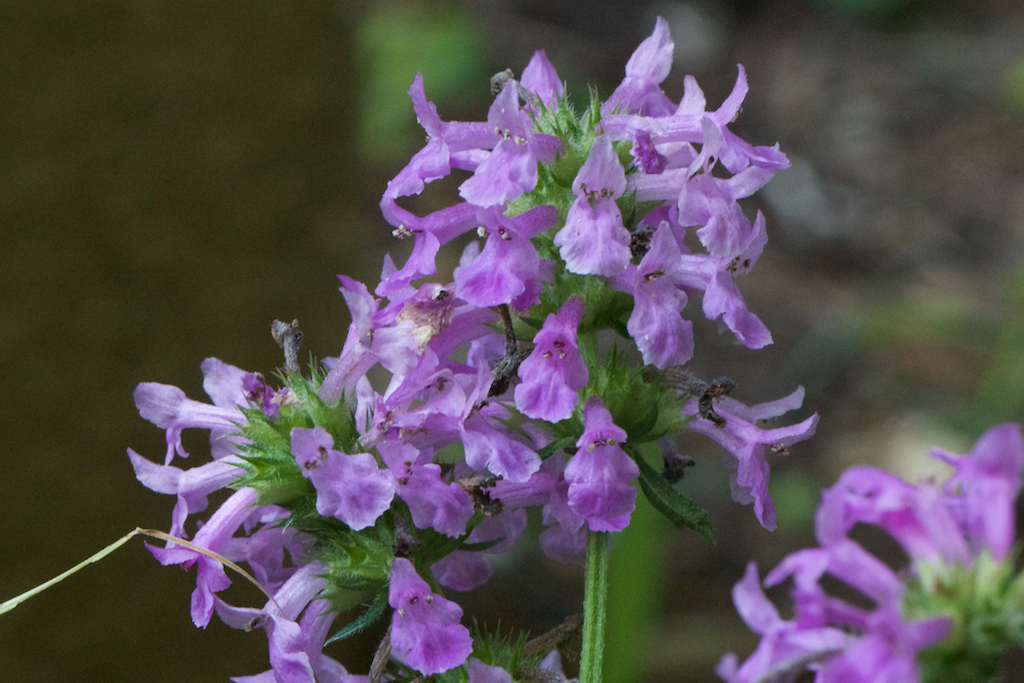
Stachys officianalis
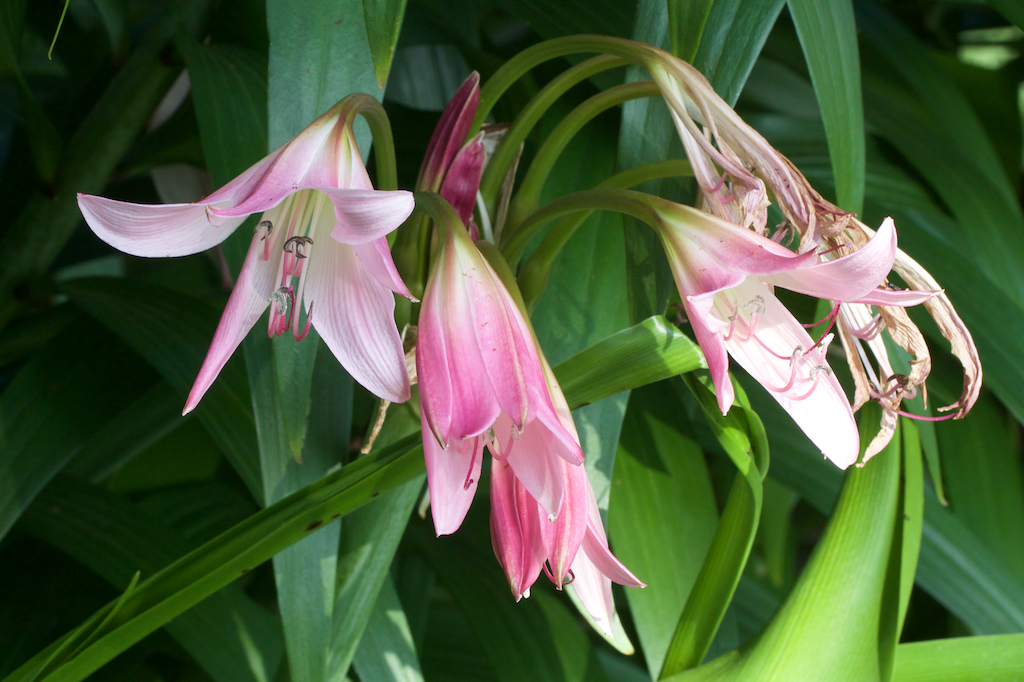
Crinum powelli

Hydrangea ‘Blue Billow’
Yes, the ‘Blue Billow’ is very pink.
From the greenhouse we have a couple of little cuties.
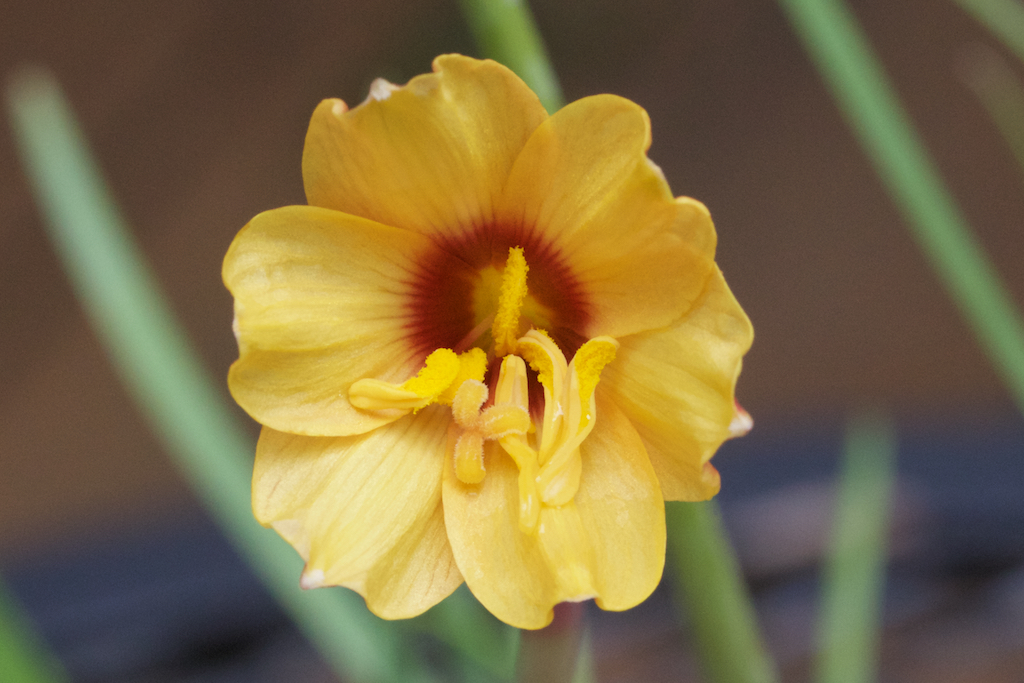
Habranthus tubispathus
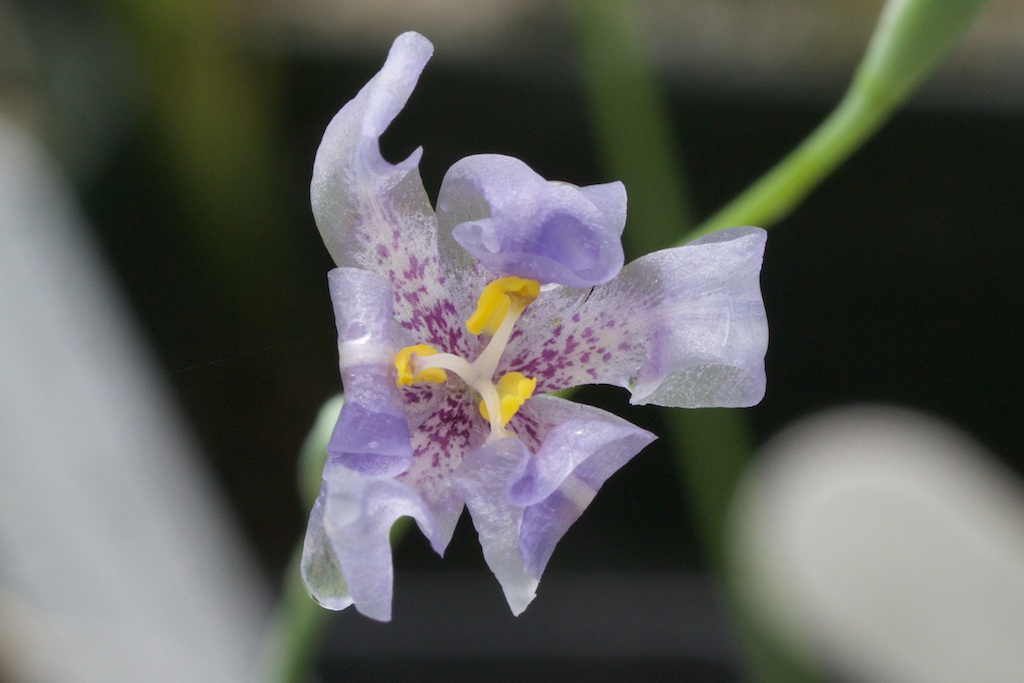
Calydorea amabilis
And lastly though the Garden Blogger’s Bloom Day is mostly about the flowers, I think it’s worth noting a couple of beneficial insects that I saw on the flowers.

Tachynid Fly

Widow Skimmer (Libellula luctuosa)
The Tachinid fly parasitizes caterpillars, including monarch larvae, but on balance it’s a very useful contributor to the garden. The Widow Skimmer Dragonfly grabs small flying insects out of the air and it’s like having your localized air force to guard the space over your garden.
Why Alpines Inspire

A sea of buttercups
We’ve been back a little more than a week now from a wonderful exploration of the Dolomites with Greentours. We spent our days walking through meadows or scrambling up rocky cliffs finding hundreds of species of wildflowers in bloom.

Botanizing in the Dolomites
The whole experience was a reminder of why alpines are so captivating for gardeners all over the world. Their relatively short growing season and difficult exposed conditions has produced adaptations characterized by rapid abundant flowering from compact plants that are often nestled in or on rocks where many other plants cannot grow. Of course it doesn’t hurt that the scenery is glorious whenever you take the time to look up from the plants.
The trick is to learn where to look for the different species. Meadows are often filled with various small ground orchids in the same way we would expect to see dandelions in Maryland. Potentilla, Sage, Thyme, and Ranunculus are abundant.

Meadows filled with flowers
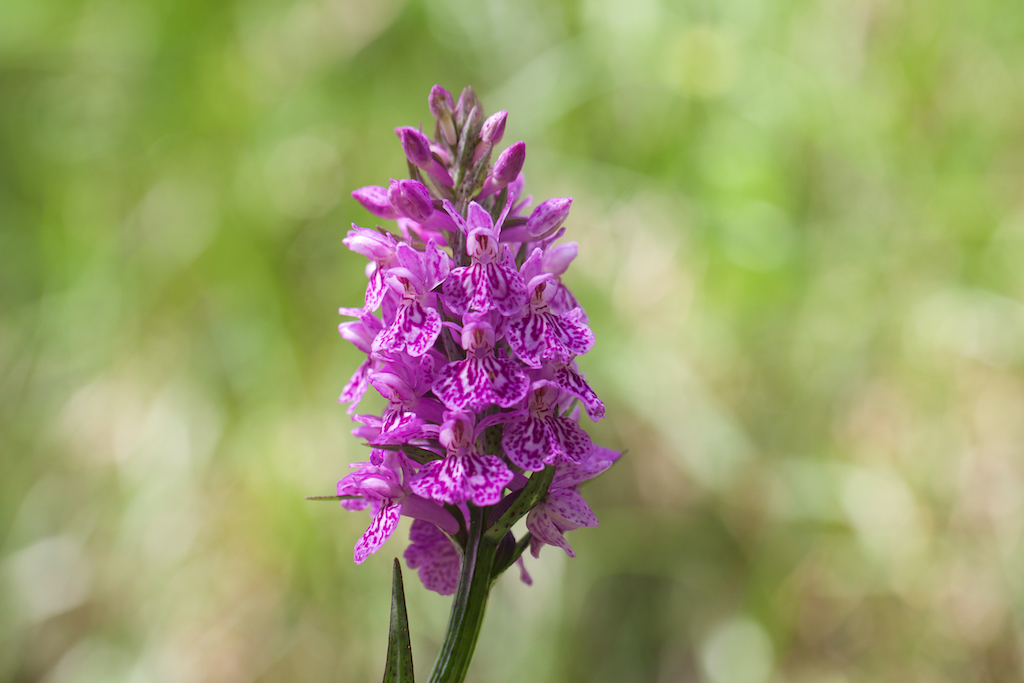
Common Spotted Orchid (Dactylorhiza fuchsii)

Dactylorhiza majalis
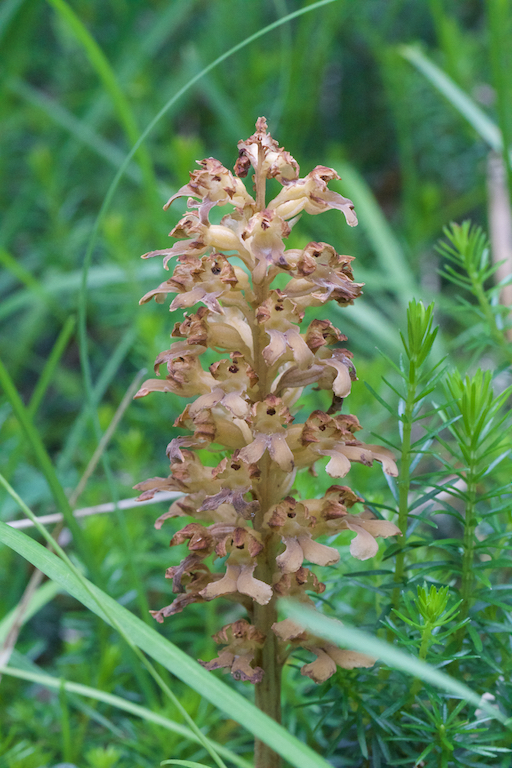
Bird’s Nest Orchid (Neottia nidus-avis)

Orobanche gracilis (Growing parasitically on Birdsfoot Trefoil (Lotus corniculata)
The interplay with the rocks mean that you often seek out rocks in a field to see what has colonized the rocks. Of course Saxifrages are particularly good at this.
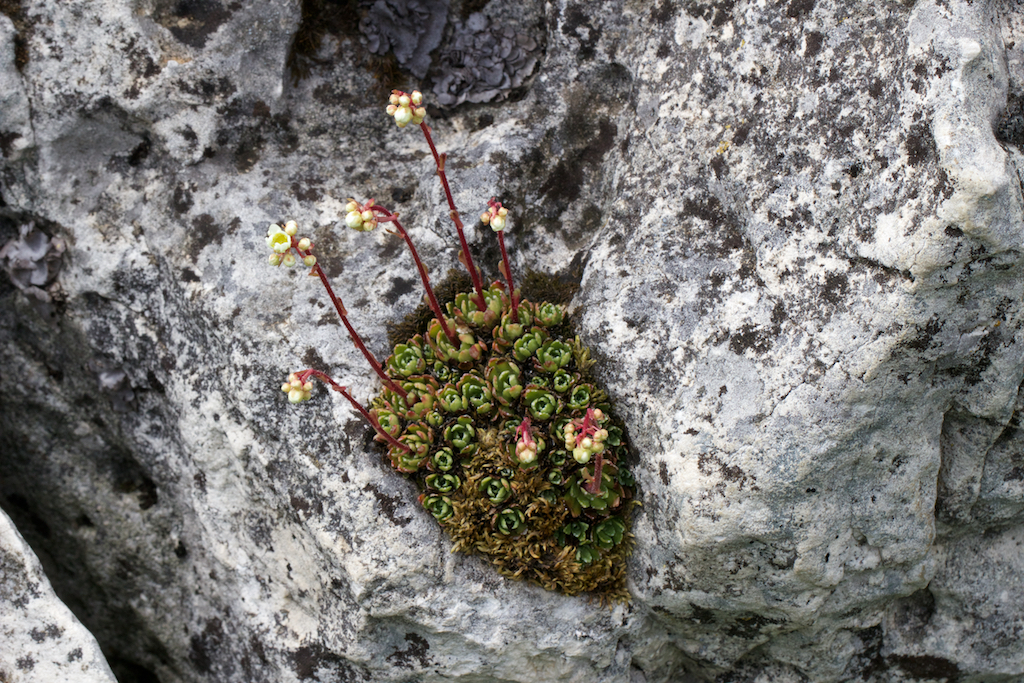
Saxifraga paniculata

Saxifraga paniculata hugs the rocks
But in between you find other treasures like the famous Edelweiss.

delweiss (Leontopodium alpinum) amid Bird’s Foot Trefoil and other smaller flowers
The Rampions were a particular favorite of mine. The Round-headed Rampion was found in many locations.

Round-headed Rampion (Phyteuma obiculare)
And on three occasions we came upon the famous Devil’s Claw in flower. This alpine flower is found only in Italy, Austria, and Slovenia and we were fortunate to actually be there when it was flowering.

Devil’s Claw (Physoplexis comosa)
The Physoplexis seemed happiest when growing on a cliff face. It immediately produced a question in our group which apparently has been a serious question for botanists. Namely, how does the Devil’s Claw get pollinated?
Another particularly beautiful flower, like the Rampions, is also in the Campanula family.

Bearded Bellflower (Campanula barbata)
Mostly we explored the areas around the mountain passes, but we also got to higher elevations on two occasions. One I wrote about on the previous posting and the other was on the next to the last day when we took a ski lift up to the shoulder of Marmolada at 8500 ft. The ground at the top is all scree below the snowline and at first you would conclude there is nothing gowing there.

Barren looking landscape on Marmolada at 8500 ft.
But on closer inspection you see that many things thrive in the scree.

Purple saxifrage (saxifraga oppositifolia)

Vitaliana primuliflora
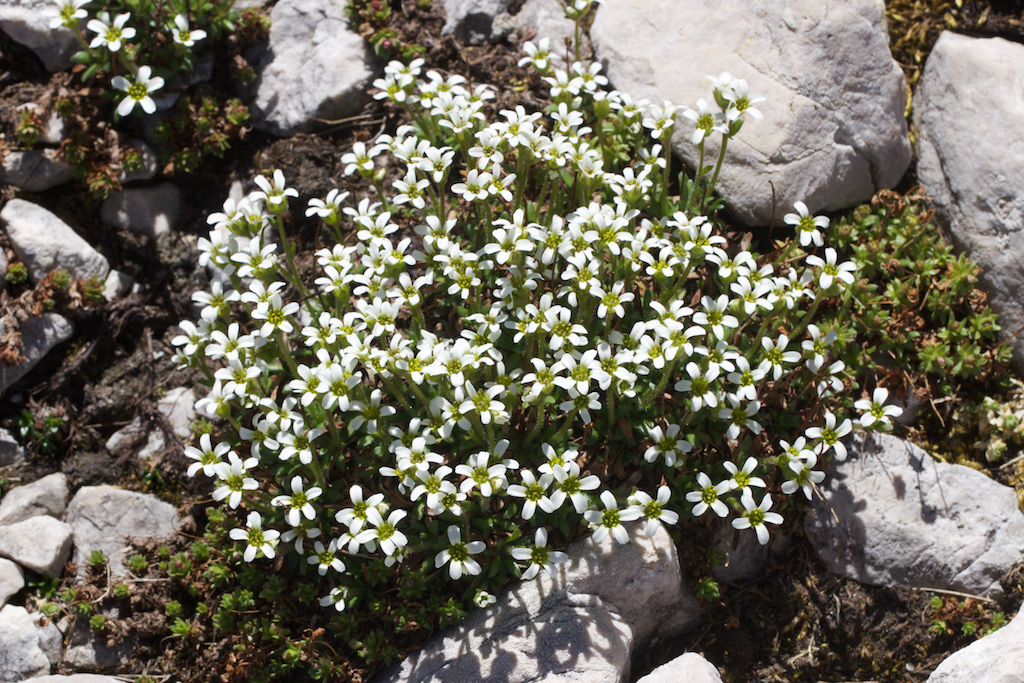
Saxifraga androsace
Especially prevalent was the Round-leaved Pennycress which seemingly colonizes every spot where someone else is not…
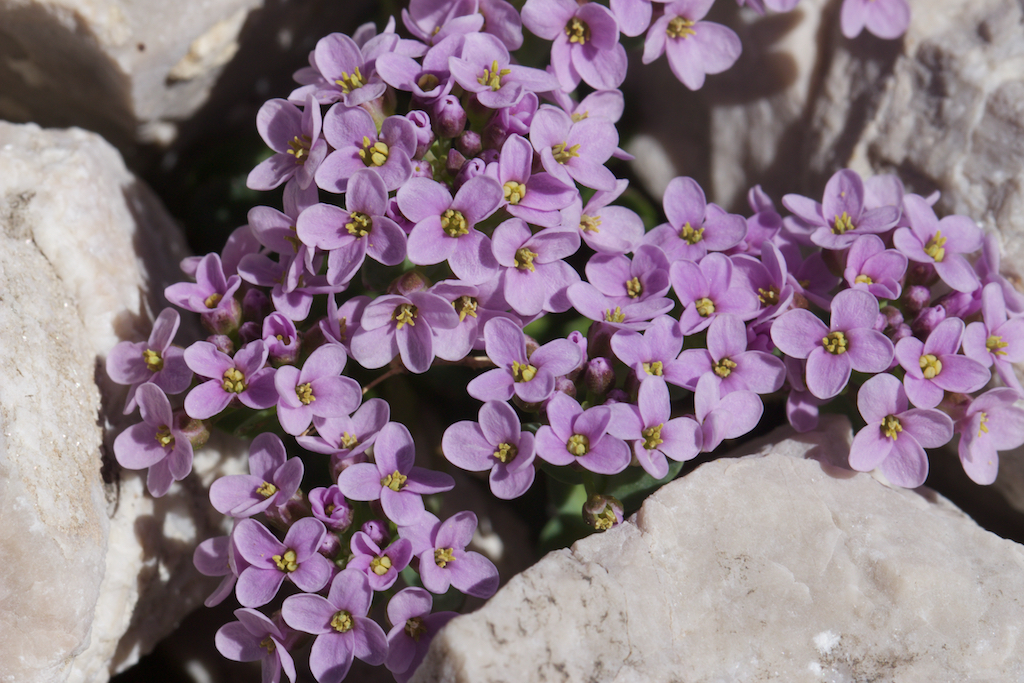
Thlapsi rotundifolium