
Colchicum bivonae
Well a relatively brief statement this month just to catch up for Garden Blogger’s Bloom Day. We are just returned from almost three weeks in South Africa and I can assure you that of the many flowers we saw there, Colchicum are non-existent. It’s their Springtime, not their Fall. We got home to find that Colchicum are happily flowering away (which is what to expect in mid-September).

Colchicum (of unknown variety)

Colchicum x byzantium ‘Innocence’
At the same time the usual winners for September were happily flowering despite the terrible dryness Maryland has been experiencing.

Cestrum ‘Orange Peel’
I was happy to see that the Dahlias were spreading their usual joy. Not only the Bishop in the perennial bed but also several other varieties in the vegetable garden courtesy of Swan Island Dahlias.

Dahlia ‘Bishop of Llandaff’

Dahlia from Swan Island

Dahlia from Swan Island
I’ll have to research the names when I get time. And we have a lot sunflowers and other annuals in the vegetable garden.

Annual Flowers in the Veg garden
But I do want to share that our exposure to South African Flowers was wonderful. This was all via a trip arranged by the American Horticultural Society. We’ve been a member since forever but this was our first travel experience with AHS and it was memorable. The arrangements were excellent and breadth of exposure to South African culture and plant life will stay with us for a long time. I’ll try to see if I can put together a more detailed summary at some point but here is just a glimpse of what we saw.

Candelabra aloe atop Table Mountain in Cape Town
An absolute must for Cape Town visitors is Kirstenbosch, one of the world’s outstanding Botanic Gardens. Kirstenbosch National Botanical Garden

Looking at the mountains that are part of Kirstenbosch
We happened to be there for the first annual flowering of the Crimson King Protea which was a celebration for even the curators.

Protea cyanoides (King Protea)
Driving through the countryside there were lovely vistas of wildflowers and wonderful opportunities to explore.

Dimorphotheca sinuata (African Daisy)
And although horticulture was a major interest it turned out that I spent a lot of time photographing birds which are every bit as beautiful as the plants.

Orange-breasted Sunbird on Table Mountain
A Spectacular Carolina Weekend

Crepe Myrtles define the entrance to JC Raulston
We just spent a marvelous weekend in Raleigh, North Carolina in an escape from the last snowstorm (I hope) to hit Maryland this year. We had planned this weekend for a visit to the North Carolina nurseries but when a significant snowstorm threatened for last Thursday, we decided to skip town on Wednesday and I’m glad we did. It gave us an extra day to visit nurseries and gardens in the ‘Triangle’ area. Even four days is not sufficient to see all that this area offers to plant lovers. There are three major gardens in Raleigh, Durham, and Chapel Hill and we went to each.
Sarah P. Duke Gardens at Duke University in Durham is what I would characterize as a display garden. It’s well funded and beautiful and has lots of examples of how to make a dramatic landscape.
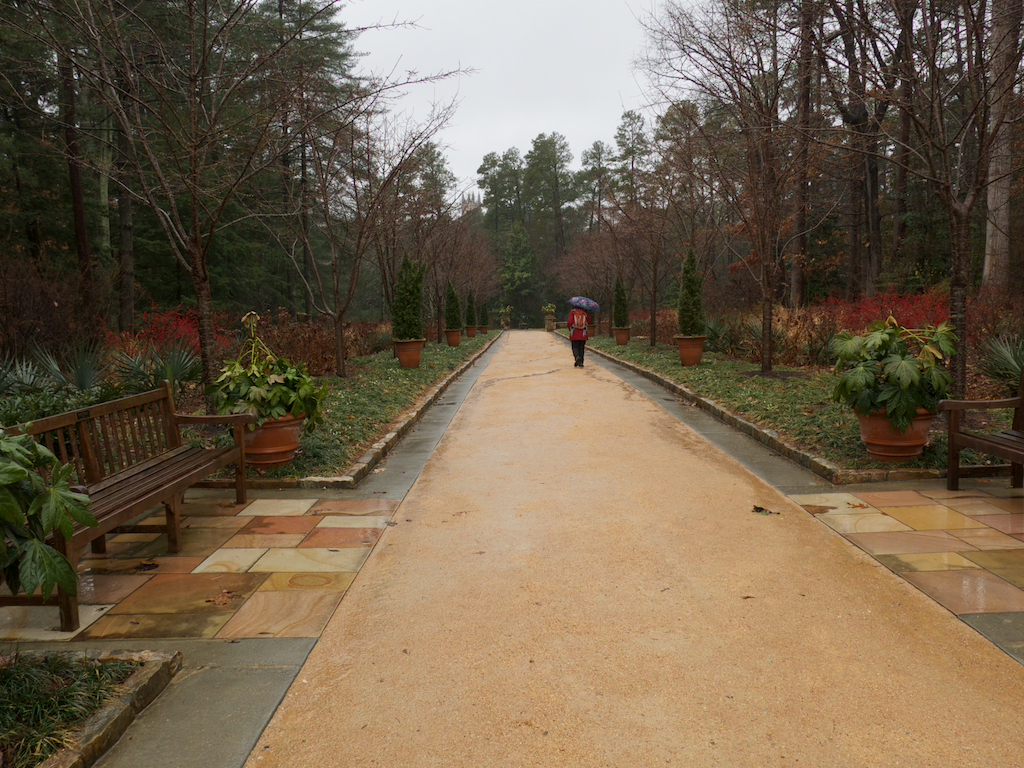
Broad Allée with Winterberry on edges
It had many lovely individual plants including this daphne which illustrated how daphnes want to look in the wintertime as opposed to the burned leaves on ours.
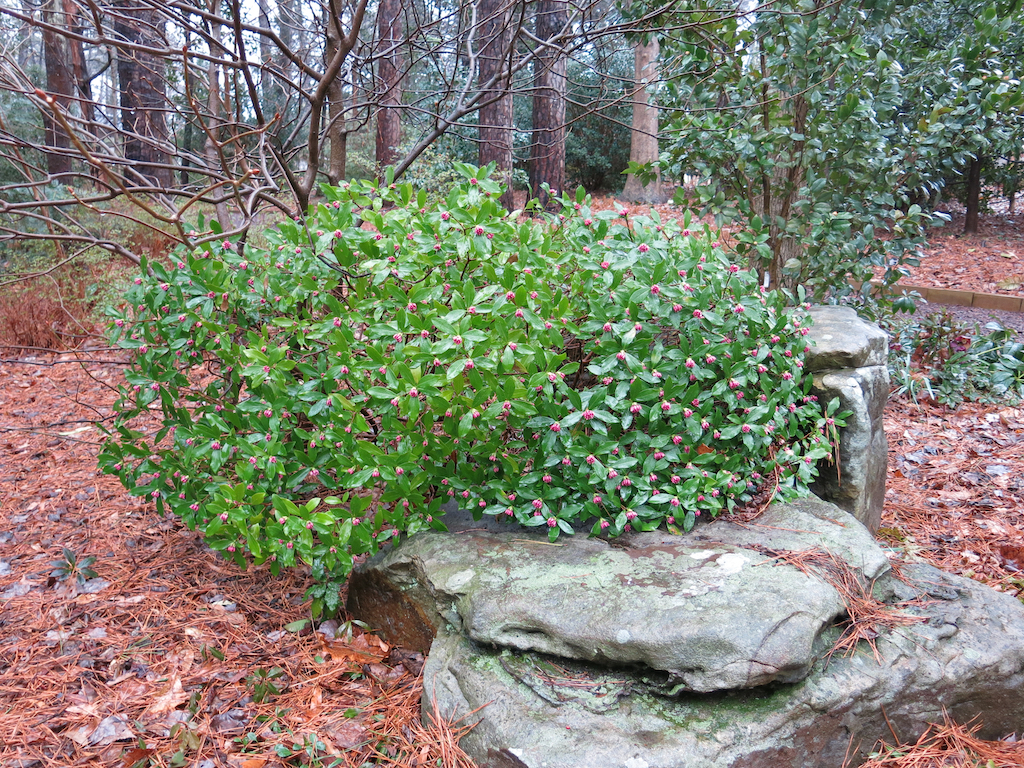
Daphne getting ready for bloom
The North Carolina Botanical Garden in Chapel Hill also appears to have a lot of financial backing and it’s focus seems to be well-coupled to the University’s effort to encourage the use of native plants.
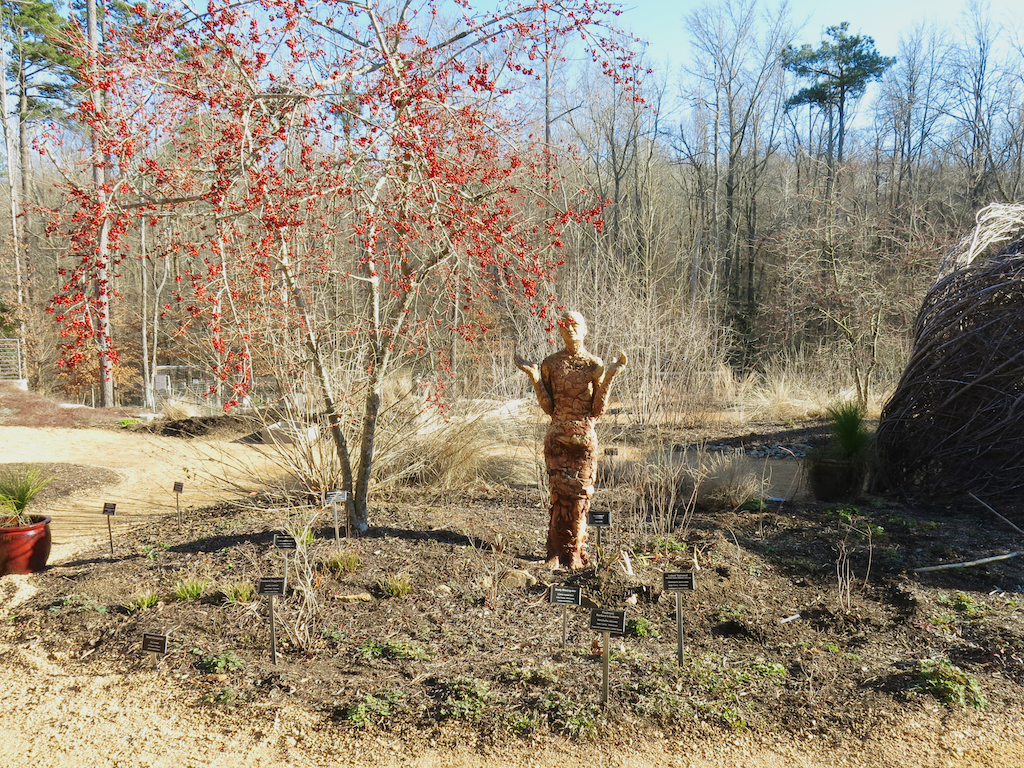
North Carolina Botanical Garden
It’s set next to woodland trails and seems to get a lot of visitors for that reason.
But our favorite was the JC Raulston Arboretum in Raleigh. This is a plantsman’s paradise. Many examples of exotic and unusual plants from all over the world including this dwarf Dawn Redwood.

Metasequoia glyptostroboides ‘Schirrmann’s Nordlicht’
It was still a little early in the season for any of these gardens but the Ralston captured our hearts.
One of the ulterior motives for this particular weekend was to attend an An Evening with the Plant Explorers at the JC Ralston. This was a wonderful event with 4 1/2 hours of tales of plant exploring mixed in with socializing and plant auctions. Anyone who thinks Latin is a dead language needs to attend one of these events. The plant auction was particularly interesting because it was often for plants that had been part of the explorers’ talks.

Plant auction
In particular we were taken by a marvelous Einkianthus, the likes of which we had never encountered.

Einkianthus description

Einkianthus quinqueflorus
Well, in the end this was our take-home plant from the auction…
The other main component of the weekend was visiting nurseries. First and foremost was Plant Delights (which has a bonus of a very nice garden as well). As usual we found many wonderful plants that jumped into our car.

Plant Delights collection
There were three crates like this one that we brought home including many new hellebores.
And then we went out to Pine Knot Farms where the focus is hellebores.

Pine Knot Farms
And we came away with even more hellebores as well as multiple cyclamen from John Lonsdale and a Mahonia confuse ‘Narihira’ (which we had seen at Raulson) and Edgeworthia chrysantha from Superior Plants.
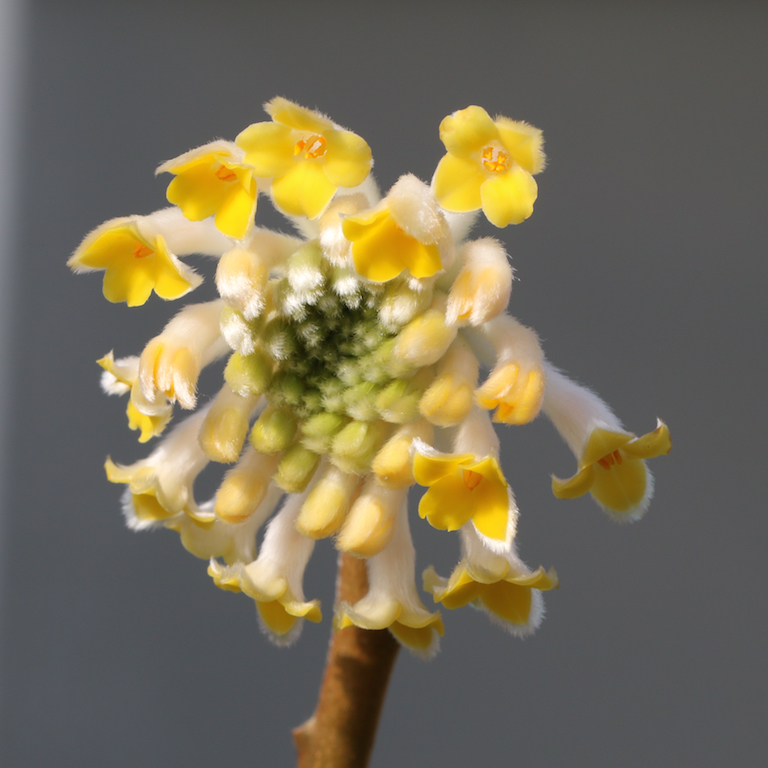
Edgeworthia chrysantha
John Lonsdale says that Edgeworthia survives for him in Pennsylvania so I have high hopes for it in Maryland.
Lastly we stopped at Camellia Forest and picked up four new camellias and two exquisite miniature Rhododendrons.

Rhododendron indicum ‘Kokinsai’
Altogether a wonderful weekend, and by the time we arrived back home the spring was waiting for us…
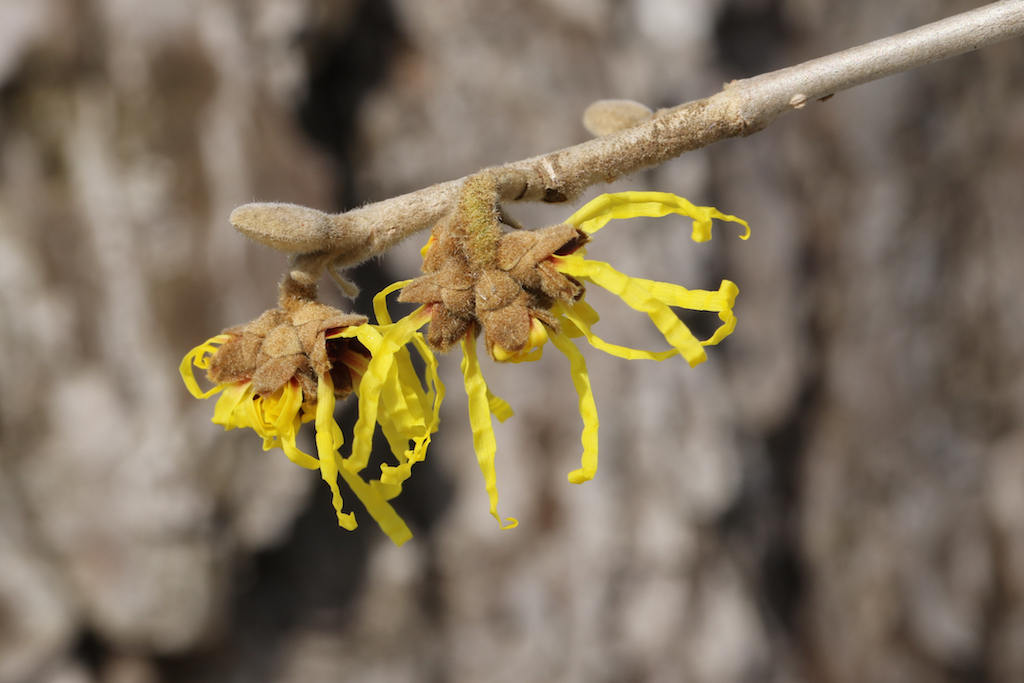
Chinese Witch Hazel (Hamamelis mollis)
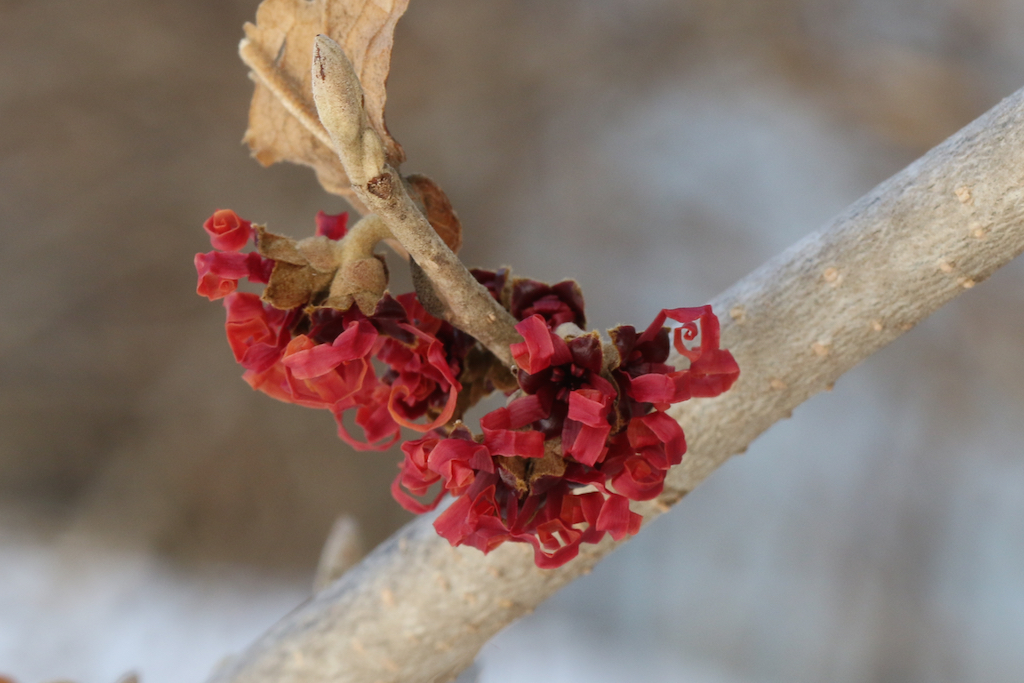
Hamamelis × intermedia ‘Diane’

Adonis amurensis
Let me close with one more shot of that Einkianthus which I hope will be with us for a long time…
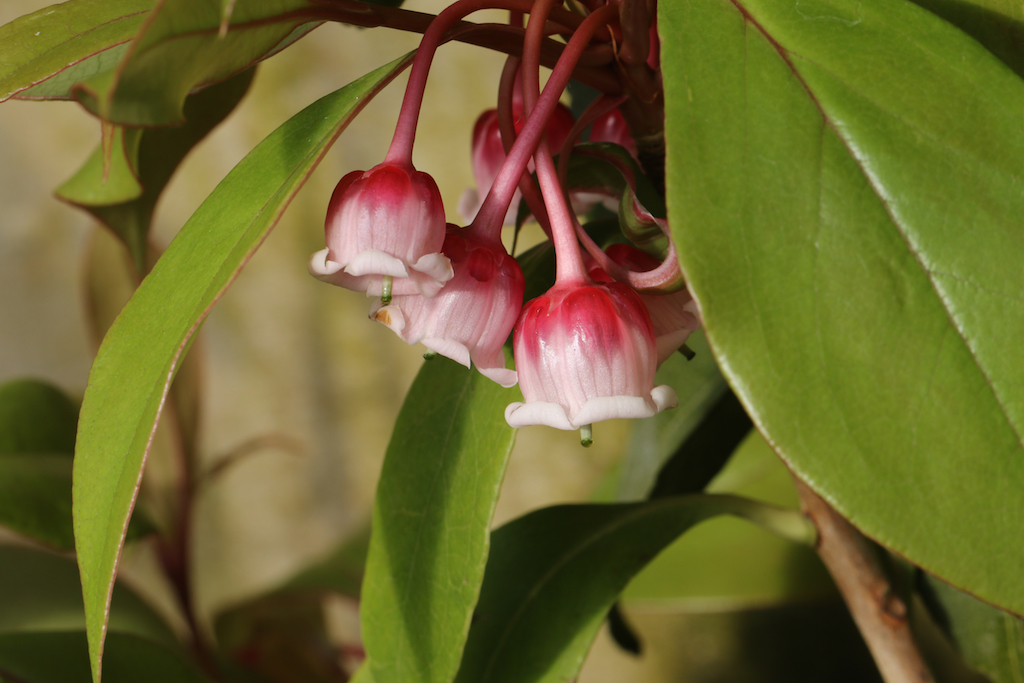
Einkianthus quinqueflorus
A Primula Arrives Early to the Party
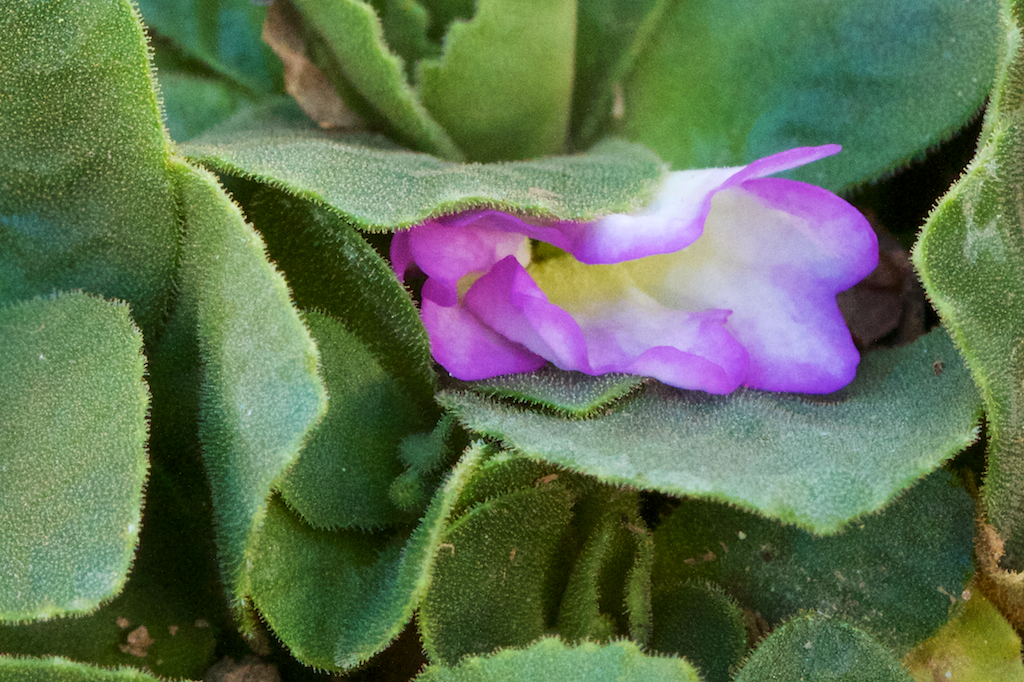
Primula allionii ‘Wharfdale Ling’ peeking out
I was surprised to see a glint of color in the Alpine bed yesterday. Indeed it was actually a first flower from the exquisite little Primula allionii ‘Wharfdale Ling’. This tiny little primula species is relatively rare in the wild but has been widely propagated and hybridized because of the size and beauty of the flowers for such a small plant. Jim Jermyn has a great write-up on this species and its natural growing conditions. I’ve just finished my seed order for the Scottish Rock Garden Society seed exchange and I’ve included a different Primula allionii selection on my list. This one has the honor of being the first plant to flower in the new alpine bed — months ahead of time.
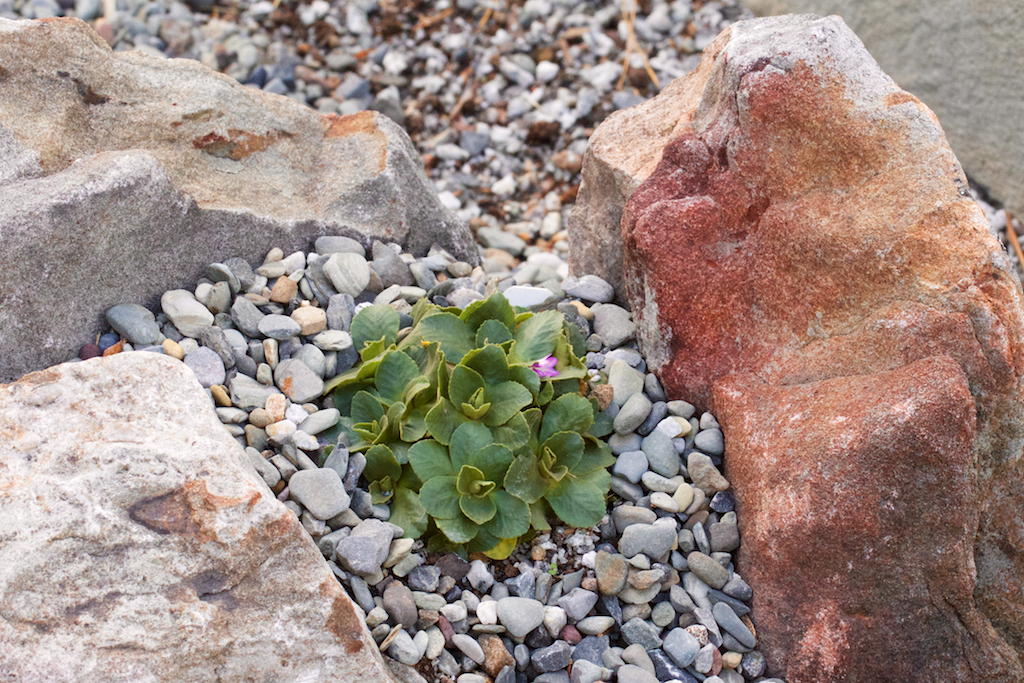
Early blossom on Primula allionii ‘Wharfdale Ling’
It’s been generally a great week for gardening. Crisp mornings but sunny afternoons. I spent this afternoon cleaning the moss off of pots in the greenhouse. But not before noting that yet another oxalis species had come into flower.
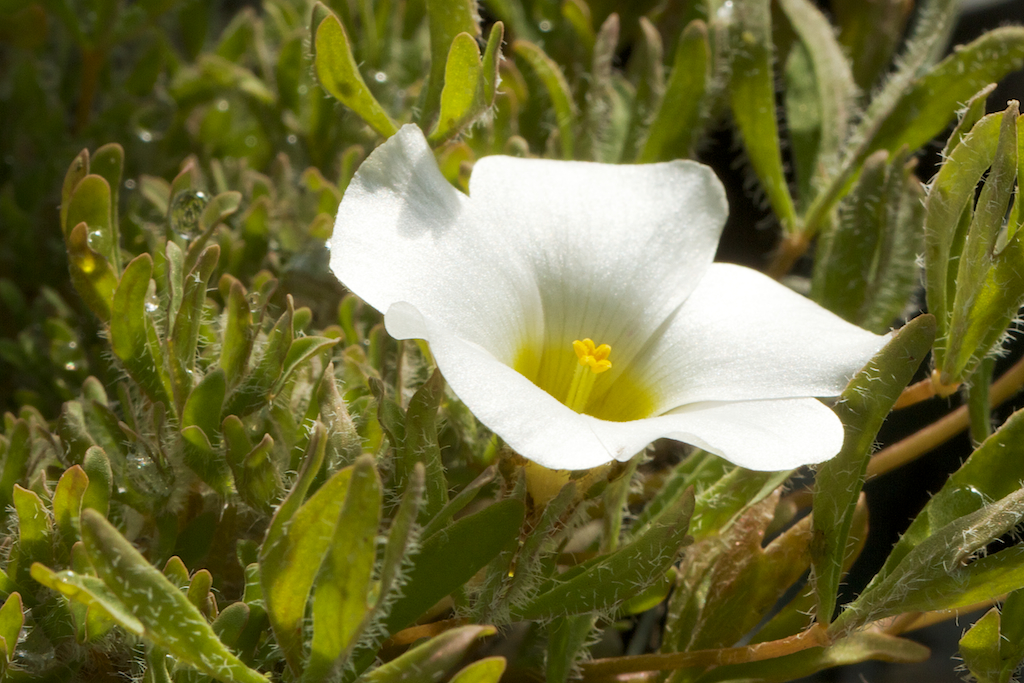
Oxalis densa
Notice the little hairy leaves. The oxalis are all so different. The buds on these are yet another distinctive image — I need to get a picture. Back to the moss, it had really built up on some of the small bulb pots. As it turns out when you use a gravel top dressing the moss just lifts out taking the some of the old gravel with it and doesn’t disturb the underlying bulbs. And then you just replace the gravel.
We took off one day on an excursion looking at garden art at Alden Farms and the unusual plants at Susanna Farms. Many of the items at Susanna Farms were landscaping specimens beyond our price range, but we did come back with two very nice additions.

Rhododendron nakaharai ‘Pink ES’
The fall coloring is just great on this prostrate rhodie. It will be interesting to see how it flowers out in the spring. It’s said the flowers appear at nearly the end of the rhododendron season which would make them very late indeed.

Crytomeria japonica ‘Little Diamond’
We have always liked Cryptomeria. Our biggest one is 30-40 feet high at the back of the yard. This one should stay within the 2-3 ft range.
The garden art visit was equally fun. We met David Therriault, stone designer and walked through his sculptures. He works mostly with salvaged materials and repurposes them into artwork. We saw several pieces that we liked (it’s Beth’s birthday present), but the one which was our favorite seemed to large for the new garden that we’ve built this fall. However, when we came home it seemed like it could fit after all. To check our perceptions I photoshopped a copy of the sculpture into place, and indeed, we think it fits.

Garden without totem

Garden with Totem
This is all part of our growing love for stone of all sorts. We went to the local stone dealer yesterday and came home with some very pretty pieces from their loose rubble. It’s like buying plants except you don’t have to water them…

Stone with character

Silverlake strip

Emmitsburg-Brown
Starting a New Garden

The Pine Succession Garden
Every garden has a beginning. In this case the garden can be traced to a storm — Sandy, to be specific. A very large Pine Tree came down on our neighbor’s fence line. Leaving a channel of sunshine and a lot of dead roots in the ground. We had also opened space in this area last year when we took out an old and dying Cherry tree (with a stump still remaining). We took the new site as an opportunity and have been considering all year how best to use it. Watching the sunlight in this area it looks like it’s a mix of sun and shade, in other words, part-sun or part-shade depending on the time of day and time of year. But the ground was very hard and covered with roots from the cherry and pine. And I’m pretty sure that the remaining pine and surrounding maple and holly will be sending exploring roots before long. So we decided to make a raised bed, or berm, to guarantee a fertile and friable garden area.
What started out as a small project got larger each day as we brought pickup truckload after truckload of topsoil and mushroom soil from our special store of said components in the far pasture. Because we were concerned about driving truck or tractor over the walkway in the backyard it all had to be hauled from truck to the new garden by garden cart. In the end we decided to tie this new garden into the Peony bed on the one side and the pathway in back of the big American Holly on the other. We added some rocks hauled in from the leftovers at our local rock dealer to build structure and character into the bed. Actually I just like rocks. No other explanation is needed. I thought hard about how to add a burbling brook in the middle but no matter how I conceived it there is no way that a burbling brook looks natural in our yard (and I would have to decimate too many tree roots to bring water and electricity to that spot. So in the end we now have a pretty large new garden space just waiting for plants. This is so unlike me to have the garden space before the plants.
Well, there are a few plants waiting in the wings. There’s a Hydrangea serrata ‘Blue Billow’ that is already outgrowing it’s pot and is needing a home. There are two camellias, one fall and one spring, that are perfect for this lighting situation. When we could see the outlines of this garden begining to take shape we went to the local nursery to see what might still be around. We came away with some real finds. Most especially a Mahonia without spiny foliage.
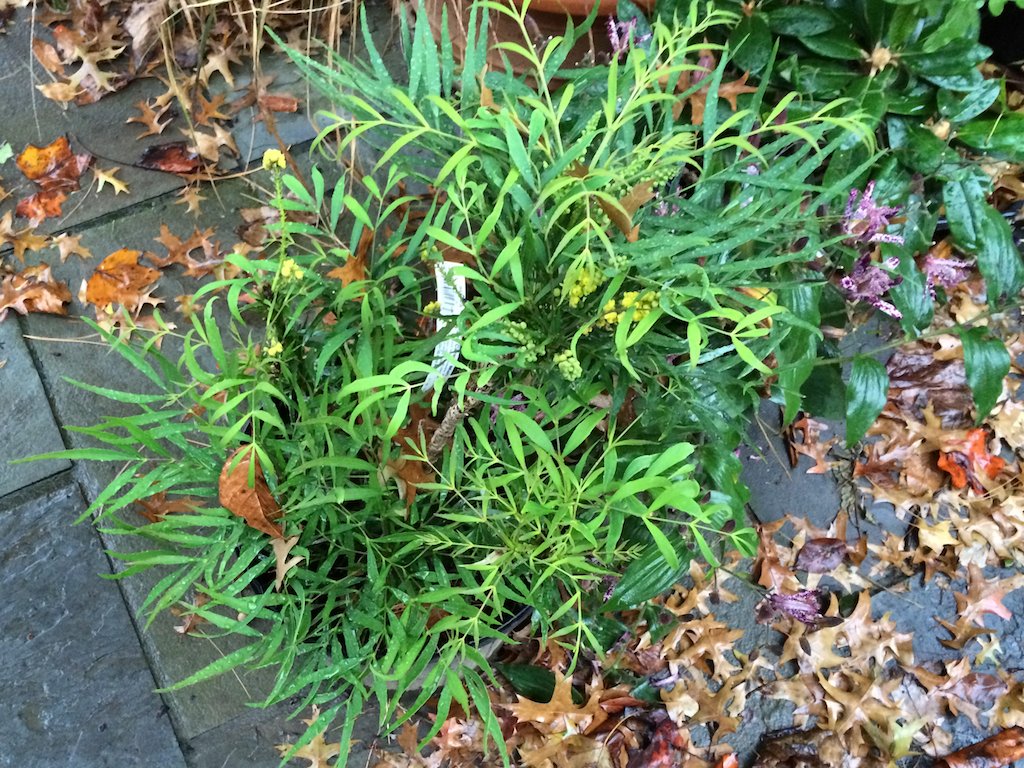
Mahonia eurybracteata ‘Soft Caress’
It’s called Mahonia ‘Soft Caress’ and unlike any other Mahonia I’ve seen. The leaves are more like a bamboo though the flowers immediately look like classic Mahonia flowers. Others were a tiny Rhododendron, R. Yakushimanum ‘Crete’, a Toad lily still in flower, and a bush Salvia.
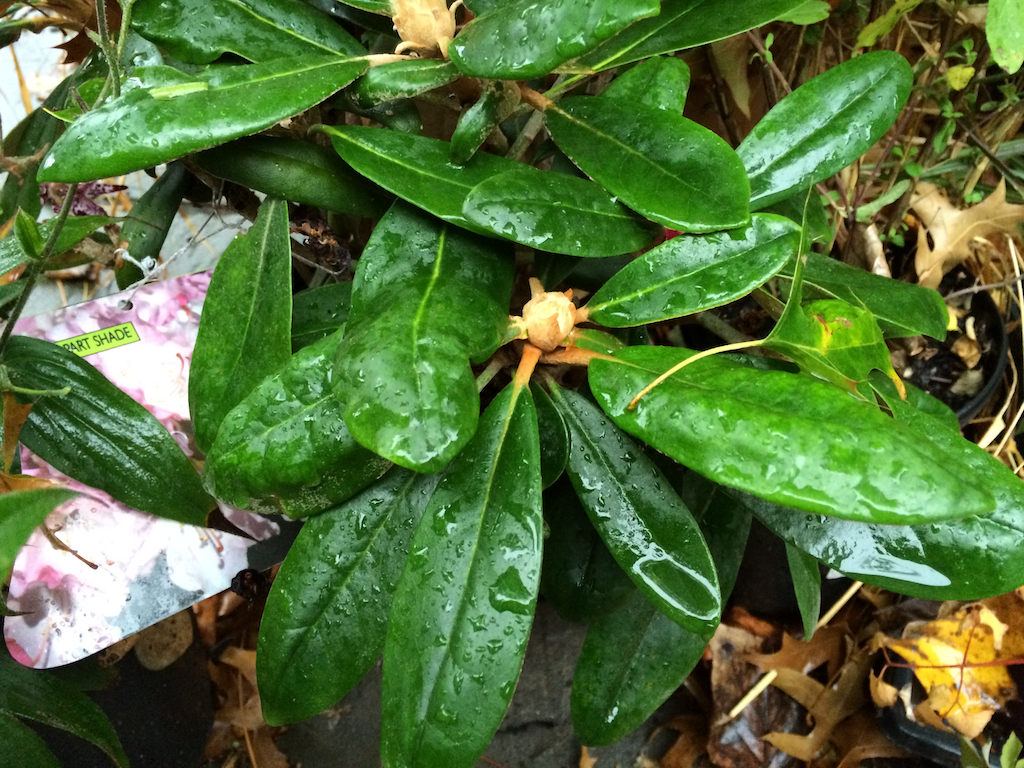
Rhododendron yakushimanum ‘Crete’

A new Toad Lily (Tricyrtis x ‘Sinonome’)
And I now foresee a lot of opportunities for planting bulbs this fall …
Trough update

Large Trough at end of July
Two months ago I planted two troughs and set out a number of alpine plants that I had been harboring this year. I thought it might be useful just to touch bases with the plants after two months of growing in their new conditions. The troughs are set in sunny locations and have received larger than normal rainfall over this period. I have supplement with the hose only a couple of times.
The current state of the Large Trough is shown here.
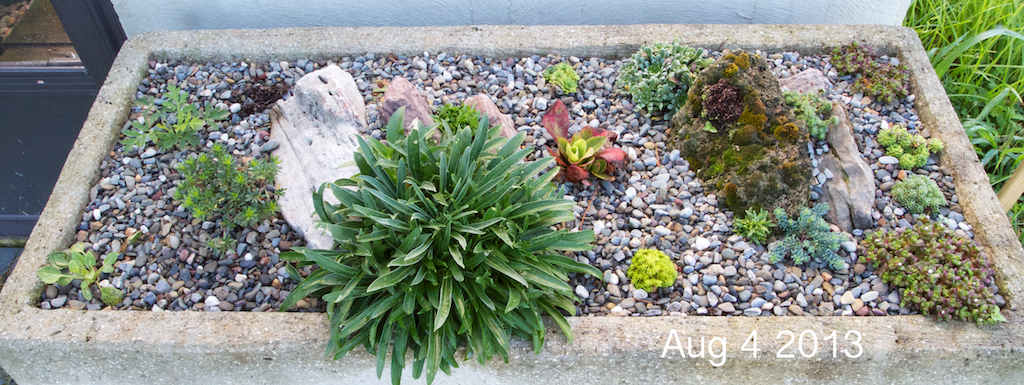
Large Trough on Aug 4th
This can be compared with the original planting.

Large Trough w- names
What immediately stands out is the Boechera koehleri which took off like a rocket. This is a relatively rare rock cress from Northern California but it has totally exceeded the bounds of the trough and I’ve since shifted it to its own pot. Interestingly when I pulled it out the roots were relatively well behaved. I had planted several other instances of the plant around the yard and none of the others showed more than 10% of the growth of this specimen. The two losses were both Saxifrages, one paniculata and the other unknown in the tufa. My guess is that it was too much sun for the paniculata. Most of the other plants have done pretty well. The Daphne looks very happy and the Delosperma is spreading nicely. The Lewisia tweedyi is one I’m keeping my eye on, hoping that it makes through to next year.
For the small trough that I planted at the same time the comparison is as follows.

Small Trough on August 4th
The original planting looked like
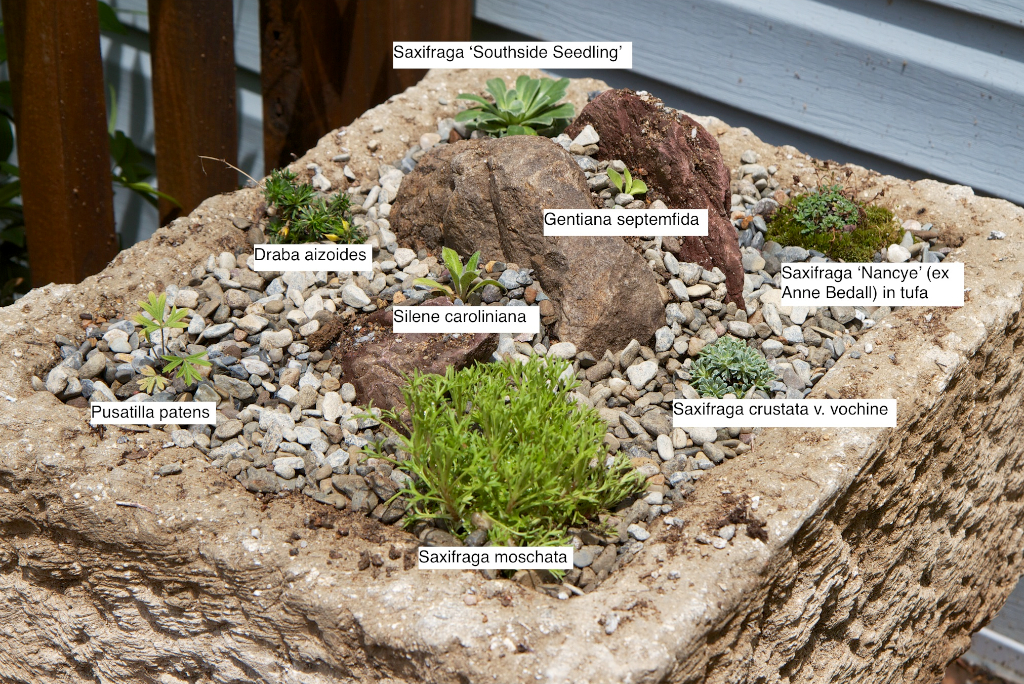
Small Trough w- names
The position of this trough gets a little more shade than the large trough but it’s still pretty sunny. The Silene caroliana grew so rapidly that I had to take it out. I then put in a small primula that did not succeed. The Saxifraga growing in the Tufa is the only other failure in this trough. Everyone else is prospering. Here is the Silene now ensconced in the front garden.
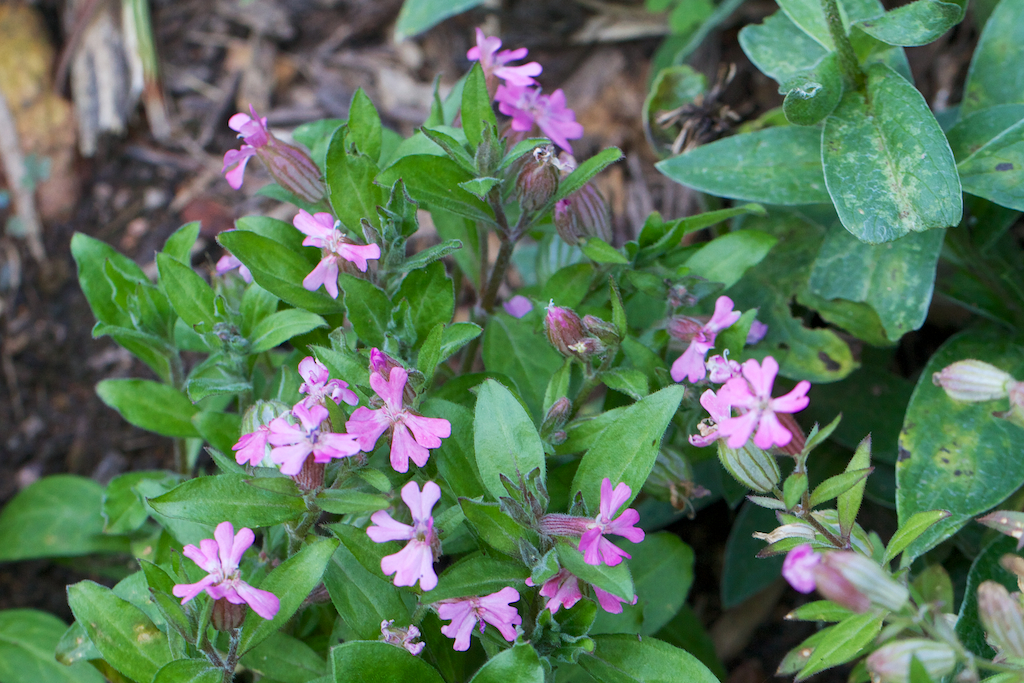
Silene caroliniana
It’s interesting to note that the tufa plants have not succeeded all. In principal the tufa should work well in the trough but it may be that it’s too sunny for the Saxifragas.
The longer term plan for more environmental opportunities for the alpines is the new alpine bed that I’ve built next to the greenhouse.

Alpine Bed by Greenhouse
This has been a pretty labor intensive effort and I’m not done yet. Just digging a trench and then laying the block was testing my muscle development, but then you have to fill the bed after building the bed. I began by adding topsoil to bring the level up to about a foot short of the top.

Filling bottom of the alpine bed with topsoil

Alpine bed ready for alpine soil mix
Then, to do the remainder of the fill, I bought a cement mixer. 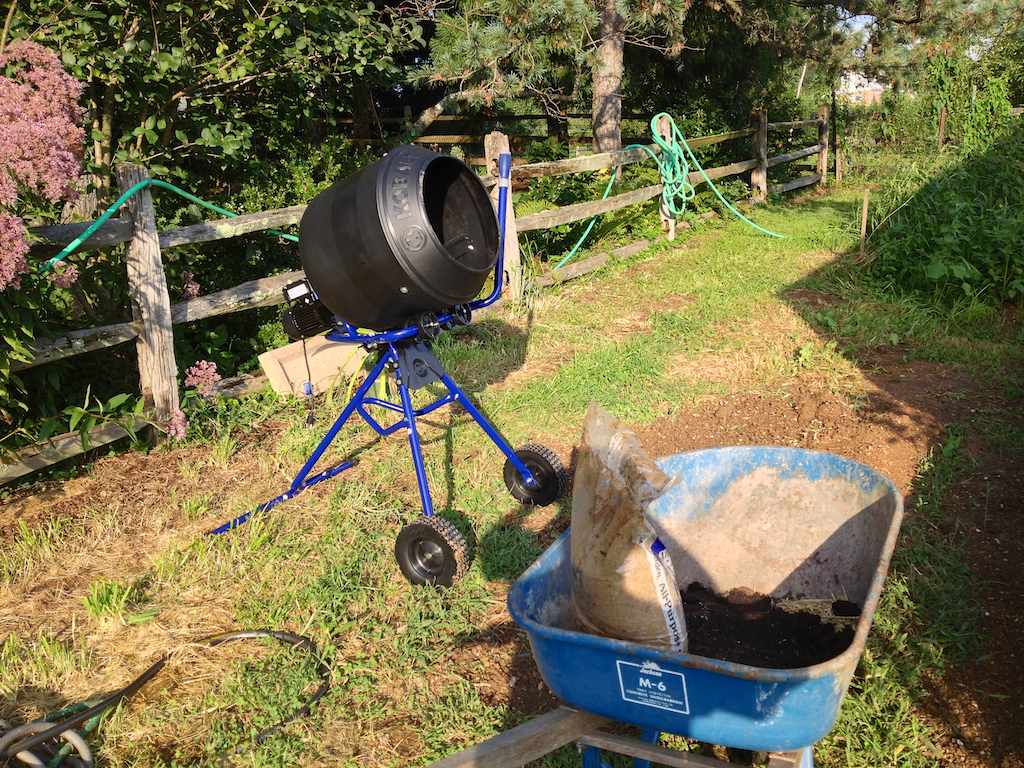 To gain some sense of what’s involved, 1 foot deep by 14 feet long by 3 feet wide amounts to 42 cubic feet. That is roughly 4000 pounds of soil mix. Mixing it by hand just didn’t seem to make sense. I used a formula of 1 part small gravel (starter grit), 1 part larger gravel (developer grit), 1 part topsoil, 1 part miracle gro potting soil, and 1/2 part garden sand.

Resulting alpine soil mix
This particular bed is on the shade side of the greenhouse so I think the Saxifragas should be happy when this is done.
Shepherd House Garden

My impression of the meadow at Shepherd House Garden
One of the special memories that we brought back from our June visit to Scotland was an afternoon spent at Shepherd House Garden in the small village of Inveresk, just outside of Edinburgh. This is a small private garden that sparkles with personality. Every aspect shows the care and attention that Charles and Ann Fraser have invested over the years.

Shepherd House Garden, one of the outstanding private gardens in Scotland

This garden is intensive

Gardens Provide a Setting in Which Pigeons Appear as Doves
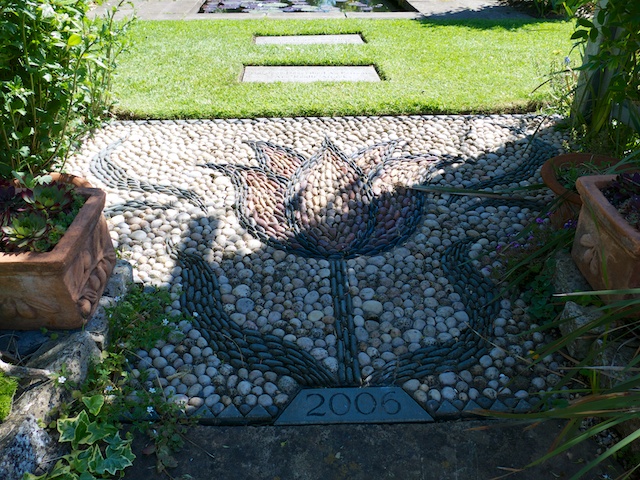
Garden Art
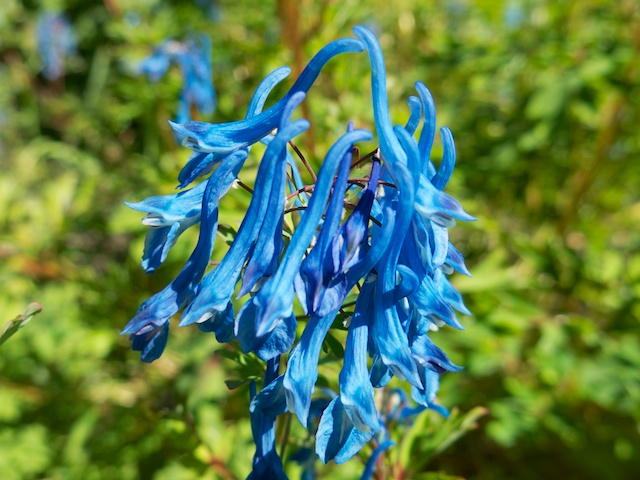
Corydalis flexuosa
We were fortunate to have Charles walk about in the garden with us as we toured the different garden ‘rooms’ within the 17th century walls. They have about an acre over all but it is intensively gardened so that it seems even larger as I look back on my pictures. Every year they take on another project to enhance their landscape, from the stone-walled potting shed to the artistic stone bench.

Things like the stone-built potting shed are examples of the yearly projects the Frasers take on. Note the green roof.
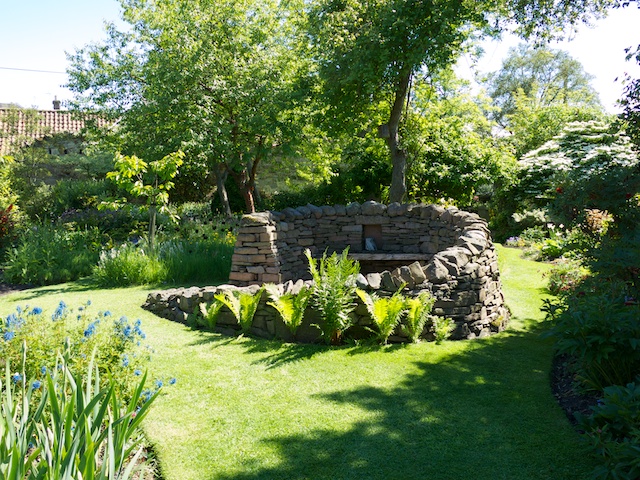
Another artistic garden project

Ann Fraser’s approach to a tree coming down
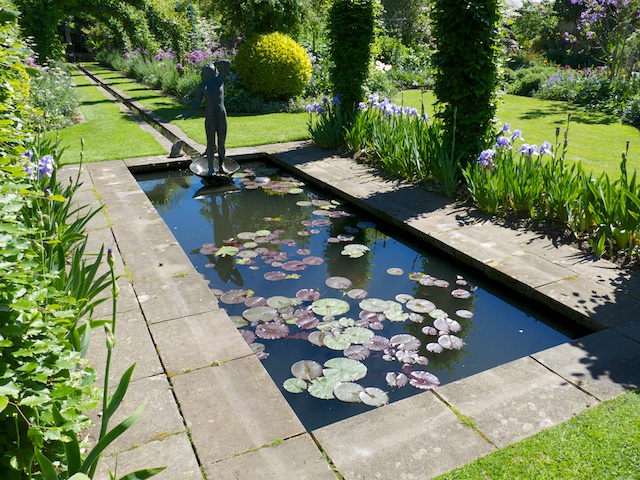
A classic water feature

Meadow Garden

Meadow Garden looking toward house
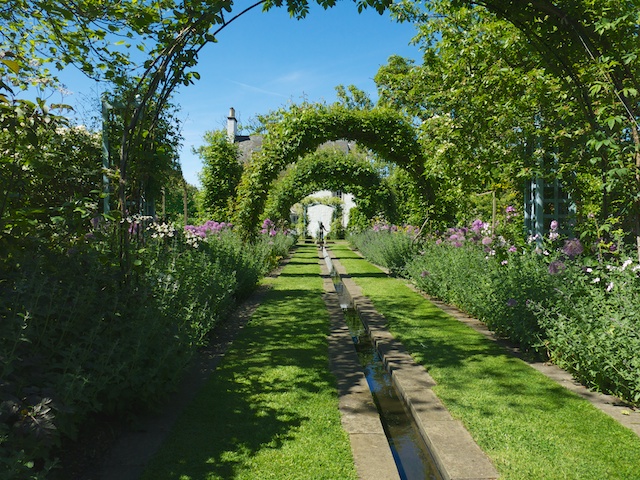
Garden Alley
If you find yourself anywhere near Shepherd House Garden you need to add it to your itinerary. Bear in mind that it is only open for limited times each week andIt would be best to check with their website directly.
A Post-Sandy Posting

50 year-old pine tree uprooted the deer fence
It has been almost 2 weeks since Hurricane Sandy ripped through a good part of the east coast, including our little hillside. Given the difficulties that many have faced with loss of homes and struggles for power and services our own difficulties pale in comparison. Nonetheless there has been an impact. Not the least of which was the loss of internet for 5 days, which slowed my abilities to report on the storm, but it was compounded by viral bronchial infection that hit both of us — hard — for about 10 days. Fortunately the good folks at Comcast came through in the end and a local contractor repaired the roof damage very quickly. Also, thanks to Chris and Kevin, the same young guys that installed our deer fence, we have the deer fence intact again.
We were without power for only about 4 1/2 hours when the storm first hit. And given the way the trees were uprooted along our street it could have been much worse.

About 100 yds along our road a fallen tree in the forest knocked out power and internet cables
We live about 1 mile from the Monocacy River and the state highway bridge across the river was really not far above the water.

Monocacy River was well over its banks
In addition to the 50 year-old pine in our neighbor’s yard that came down in the storm without hitting either house, we lost the 35 year-old sugar maple that has regularly been a feature of our comments on fall color.

Sugar Maple toppled by the storm
Numerous white pines in the forest and pasture were felled or broken off halfway up by the storm.

Fallen Giants

Fallen White Pines in the windbreak

Many breaks were halfway up the tree
Losing these trees along the windbreak gives one a whole different impression about what the descriptor ‘windbreak’ might really mean. All the white pines were planted back in 1976 from seedling trees from the Maryland Forest Service.
On the good side of the ledger the greenhouse, newly constructed, withstood the storm with flying colors. We are beginning to feel healthy again. The repairs have been made. We have a new semi-shade garden spot where the neighboring pine used to starve other plants for light and water.

Restored Deer Fence
And some more firewood…

Remains of Sugar Maple
The fall, despite the storm, remains remarkably mild. I have seen viburnum and azaleas beginning to flower. Even the spring blooming camellias are beginning to put out blossoms.

Double Camellia showing spring bloom
And the Geranium hybrid ‘Rozanne’ is just a non-stop flowering wonder…

Geranium ‘Rozanne’
And with that I will close just counting our blessings, including four more years with president who doesn’t believe that 47% of the population can be dismissed just because they weren’t born into wealth…
Washington Gardener Magazine Photo Contest
Saturday afternoon found me at Brookside Gardens in Rockville, Maryland at the seed exchange sponsored by Washington Gardener’s Magazine. I was there not for the seed exchange but for the results of the photo contest which I had entered a few weeks ago. The challenge was to submit your best pictures from 2011 in four categories with the resultant winners to be published in the magazine. As it turned out I won first place in the Garden Vignette category for my photo of an illuminated watering can

Watering Can First Prize Winner
And in addition I picked up an honorable mention in the Garden Creatures category for my photo of a blue-winged wasp from last July.

Blue-winged Wasp Honorable Mention
Actually the most rewarding part was reviewing all my gardening pictures for the year and thereby whetting my appetite for all those flowers and associated creatures that will be arriving in 2012. In addition to appearing in the magazine the photos will also be on display in Silver Spring for a couple of months and I’ll share that information when it becomes available.
I took advantage of the trip down Rockville to do a little garden exploring at Brookside. They have a lot of snowdrops in bloom right now (some in an interesting green and white ivy) and a few early daffodils. Unfortunately they still have a lot of trees and bushes wrapped in Christmas lights which detracts from wanting to photograph the winter forms of the bushes and trees. However, I did see a lovely little Japanese Flowering Apricot in bloom.

Japanese Flowering Apricot (Prunus mume) 'Kobai'
The flowers are small but very pretty up close. There was also a spectacular hybrid Witchhazel with vivid orange coloring to the petals.

Witchhazel (Hamamelis x intermedia) 'Orange Peel'
As I walked around this small (about 50 acres) but well cared for garden I was reminded once again how much this is a community garden, one which strives to inspire and be a part of the surrounding neighborhood. There are many walkers and joggers who look like they use the garden on a regular basis. And for those of us who are less often there, the pathways and views provide ample reason to return again…

Brookside Gardens