
A sea of buttercups
We’ve been back a little more than a week now from a wonderful exploration of the Dolomites with Greentours. We spent our days walking through meadows or scrambling up rocky cliffs finding hundreds of species of wildflowers in bloom.

Botanizing in the Dolomites
The whole experience was a reminder of why alpines are so captivating for gardeners all over the world. Their relatively short growing season and difficult exposed conditions has produced adaptations characterized by rapid abundant flowering from compact plants that are often nestled in or on rocks where many other plants cannot grow. Of course it doesn’t hurt that the scenery is glorious whenever you take the time to look up from the plants.
The trick is to learn where to look for the different species. Meadows are often filled with various small ground orchids in the same way we would expect to see dandelions in Maryland. Potentilla, Sage, Thyme, and Ranunculus are abundant.

Meadows filled with flowers
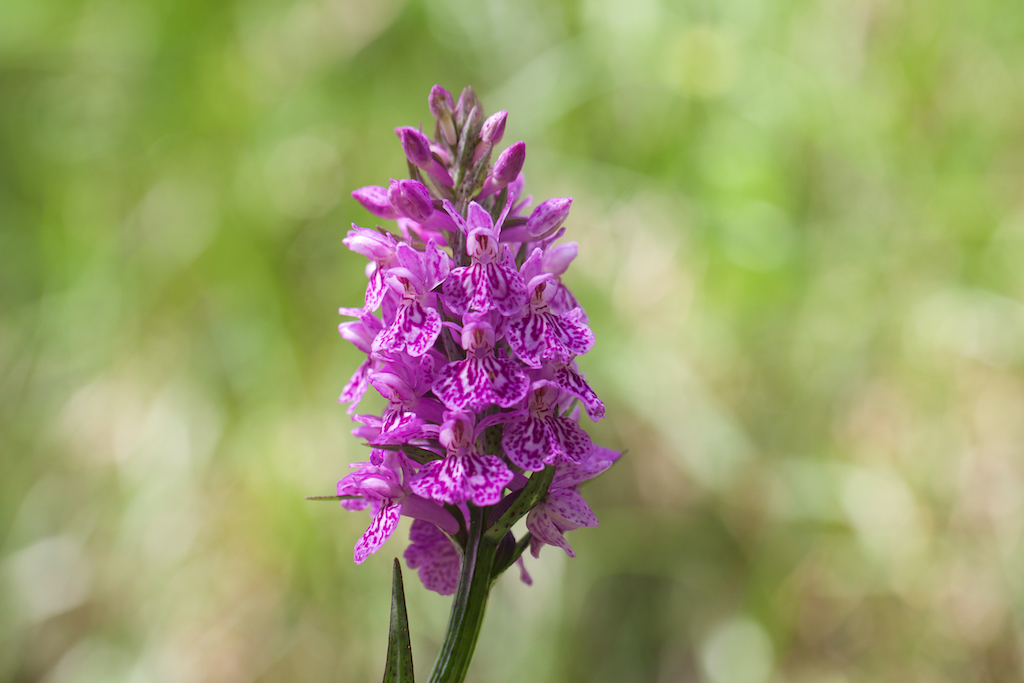
Common Spotted Orchid (Dactylorhiza fuchsii)

Dactylorhiza majalis
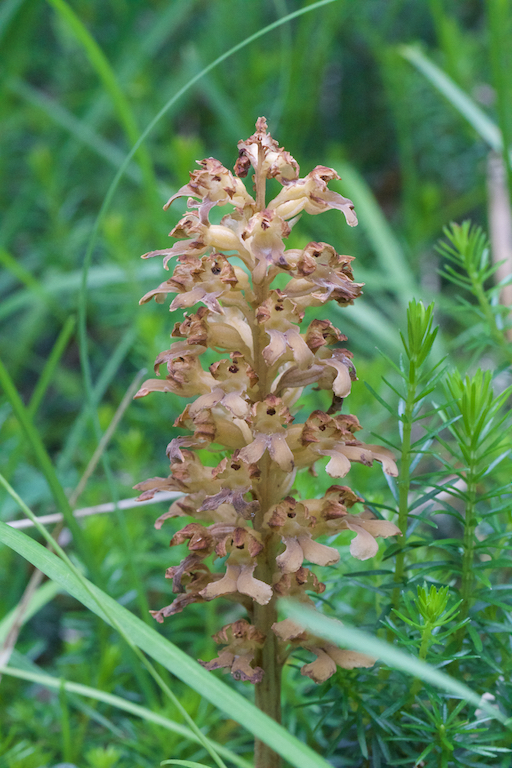
Bird’s Nest Orchid (Neottia nidus-avis)

Orobanche gracilis (Growing parasitically on Birdsfoot Trefoil (Lotus corniculata)
The interplay with the rocks mean that you often seek out rocks in a field to see what has colonized the rocks. Of course Saxifrages are particularly good at this.
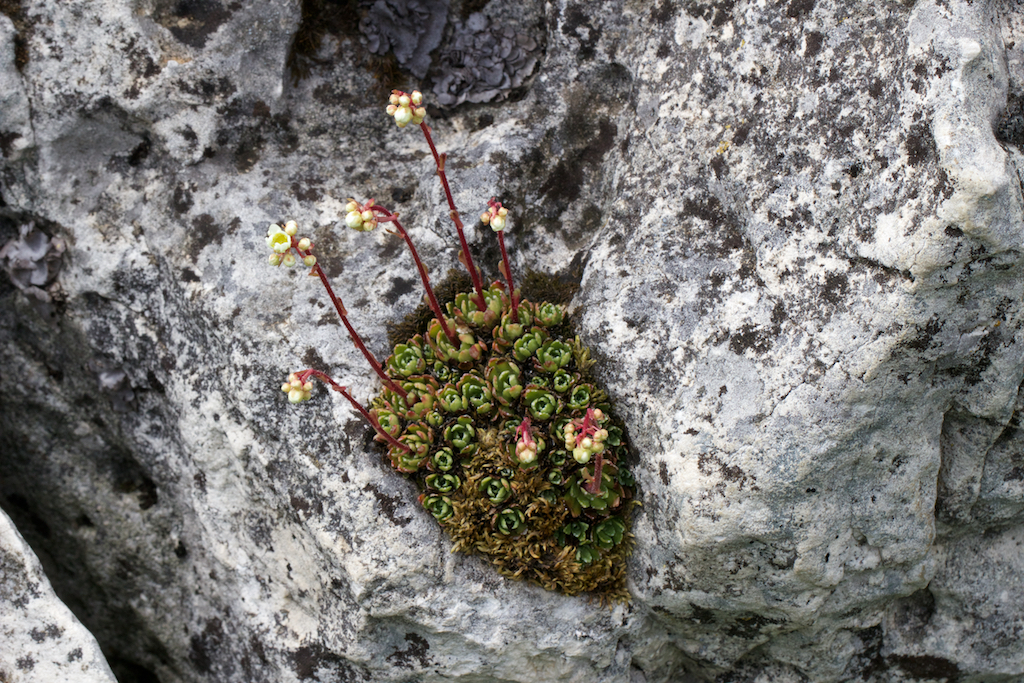
Saxifraga paniculata

Saxifraga paniculata hugs the rocks
But in between you find other treasures like the famous Edelweiss.

delweiss (Leontopodium alpinum) amid Bird’s Foot Trefoil and other smaller flowers
The Rampions were a particular favorite of mine. The Round-headed Rampion was found in many locations.

Round-headed Rampion (Phyteuma obiculare)
And on three occasions we came upon the famous Devil’s Claw in flower. This alpine flower is found only in Italy, Austria, and Slovenia and we were fortunate to actually be there when it was flowering.

Devil’s Claw (Physoplexis comosa)
The Physoplexis seemed happiest when growing on a cliff face. It immediately produced a question in our group which apparently has been a serious question for botanists. Namely, how does the Devil’s Claw get pollinated?
Another particularly beautiful flower, like the Rampions, is also in the Campanula family.

Bearded Bellflower (Campanula barbata)
Mostly we explored the areas around the mountain passes, but we also got to higher elevations on two occasions. One I wrote about on the previous posting and the other was on the next to the last day when we took a ski lift up to the shoulder of Marmolada at 8500 ft. The ground at the top is all scree below the snowline and at first you would conclude there is nothing gowing there.

Barren looking landscape on Marmolada at 8500 ft.
But on closer inspection you see that many things thrive in the scree.

Purple saxifrage (saxifraga oppositifolia)

Vitaliana primuliflora
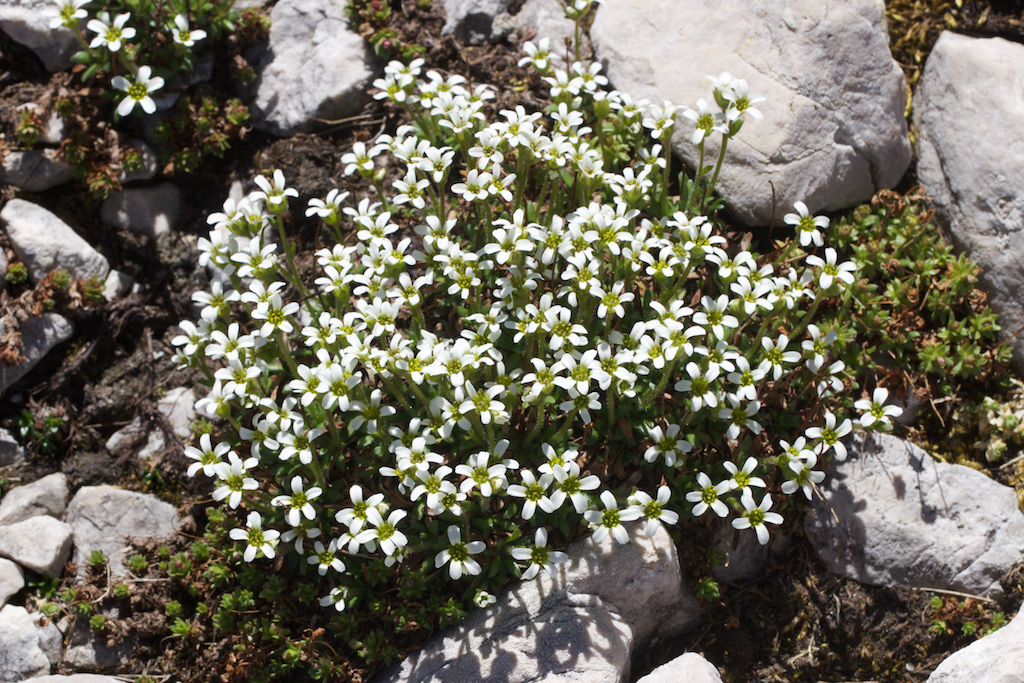
Saxifraga androsace
Especially prevalent was the Round-leaved Pennycress which seemingly colonizes every spot where someone else is not…
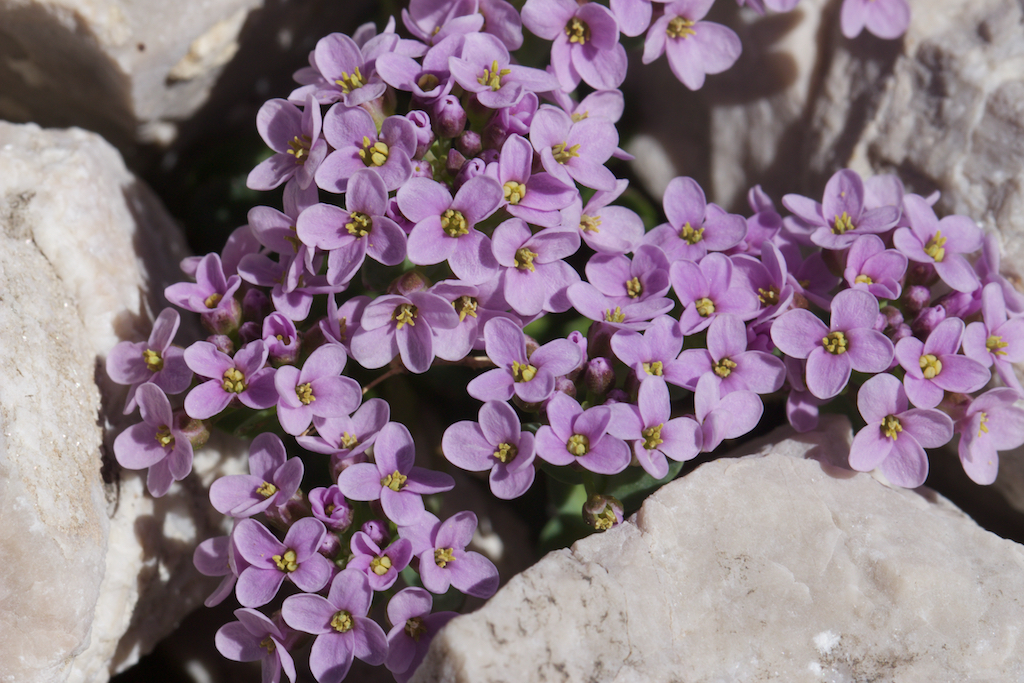
Thlapsi rotundifolium
How amazing that these tiny flowers can grow in such difficult conditions! What beauties. Lots of inspiration for daily living in these tough plants. 🙂
Thank you for the photo-mountain tour! Pure delight! We won’t be going on any mountain this summer, so pictures will have to suffice for me.
The Devil’s Claw is really a wonder! – it doesn’t grow in the Carpathians, which makes me think again how interesting is the distribution of some species, a few of them just didn’t want to ‘jump’ further 😉
What an experience to see these wonderful plants growing in their natural environment.
Such treastures! I am particularly fond of the Devil’s Claw.