
Annapurna panorama
We returned last week from a trip to Nepal that lasted most of October. Hard to summarize the adventure except to say that it was a lifetime experience that will provide memories for years to come. The natural world there is every bit as exceptional as the mountain scenery would promise with butterflies, plants, and birds that stretch the imagination. But the people were the most wonderful part of the trip. More about Nepal in a separate posting if I ever get through my several thousand images.
In the meantime we returned to the mid-atlantic to find that autumn season has taken a very relaxed approach this year. While our typical first frost is around the 20th of October, it hasn’t even come close to that. Many flowers are still doing quite well thank you. The pineapple sage which is always a late bloomer has had time to go on and on this year and has put on quite a show in the herb garden.

Pineapple sage has exploded in the herb bed
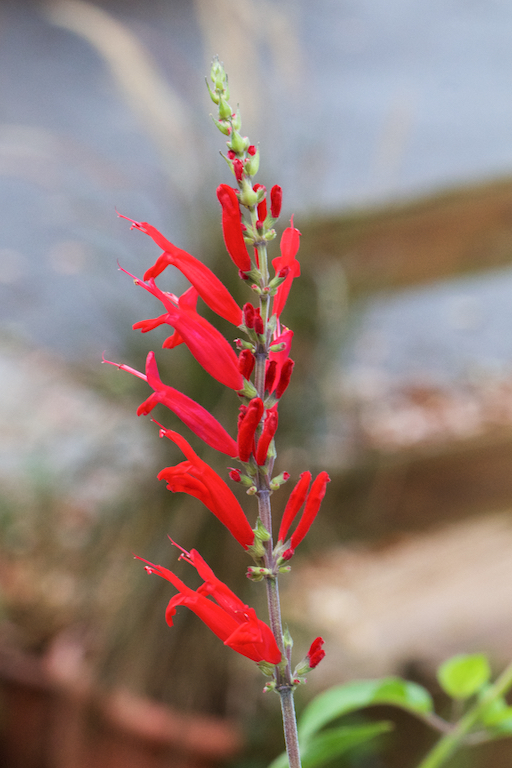
Pineapple sage (Salvia elegans)
The new Tricyrtis that we put in the monument bed has put out an extravagant array of blossoms, each one of them like little orchids.
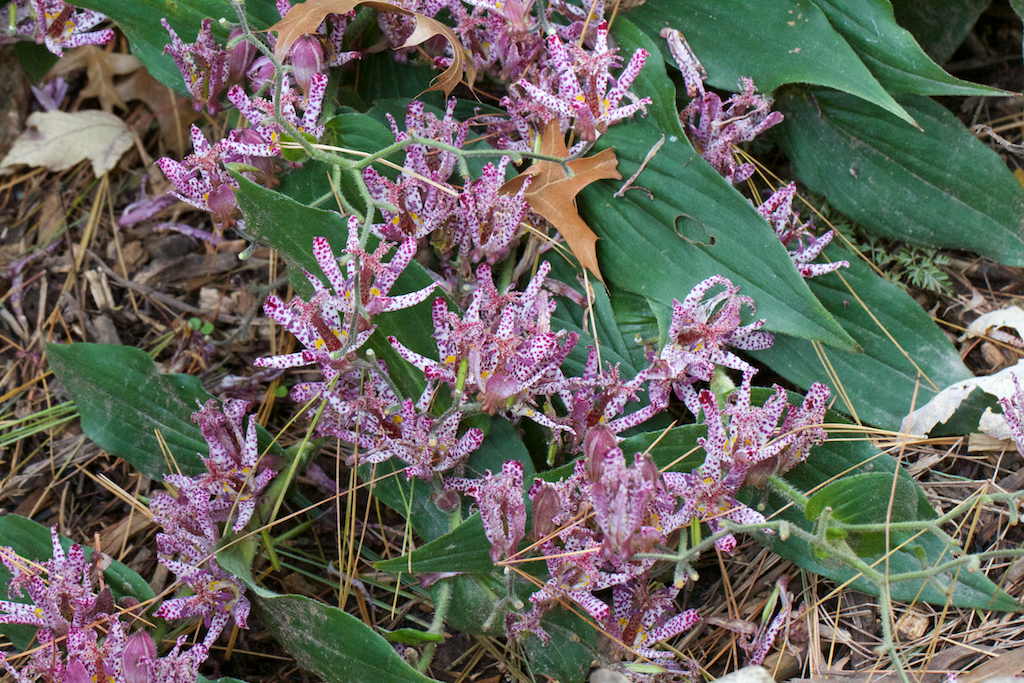
Tricyrtis ‘Sinonome’ overloaded with flowers

Tricyrtis ‘Sinonome’
Next to the tricyrtis, the Mahonia ‘Soft Caress’ has the yellow flowers that you expect from a Mahonia, but without the thorns.
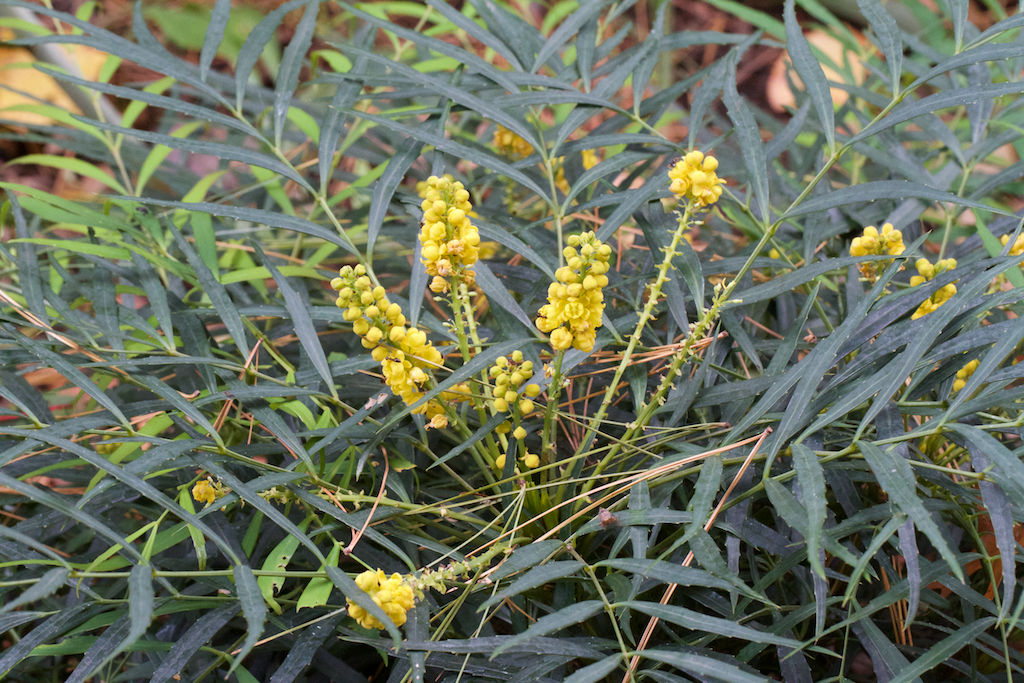
Mahonia eurybracteata ‘Soft Caress’
Surprisingly, a single stalk of an Avalanche Daffodil has decide to raise it’s flag way, way before spring time. And the insects had practically shredded it by the time we arrived home.

Narcissus ‘Avalanche’
Another flower reminiscent of springtime is the fall flowering crocus, which survives nestled up against a tree so it doesn’t get mowed.

Fall Crocus
Our usual flowering hero for this time of year would be the red Camellia Sansanqua but last years fluctuating winter has left it without flower buds. On the other hand a newly planted ‘Survivor’ Camellia is putting out lovely white flowers.

Camellia x ‘Survivor’
It is a cross between between two very hardy Camellias (C. sasanqua ‘Narumi-gata’ X C. oleifera).
Another few flowers of the white persuasion are two japanese anemones and a wonderful David Austin Rose ‘Crocus Rose’.

Anemone × hybrida ‘Honorine Jobert’
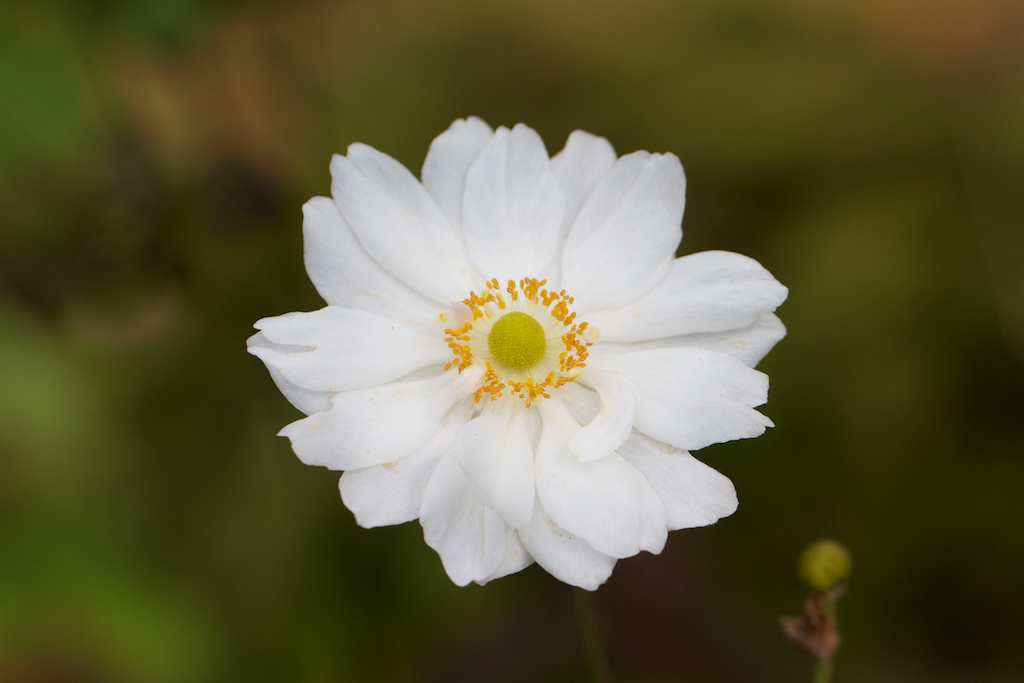
Anemone × hybrida ‘Whirlwind’

Crocus Rose
Next to the greenhouse I found that the Pommegranate Bush that I had set outside for the fall had opened up its fruit for all to see. They ripened earlier than I expected and the seeds have been delicious.

Pomegranate bursting with flavorful seeds
Inside the greenhouse itself the Oxalis have flowered up a storm. Many different species are in flower but none is quite so spectacular as the Oxalis bowiei.

Oxalis bowiei in profusion
One new plant for me was the Nerine pudica.
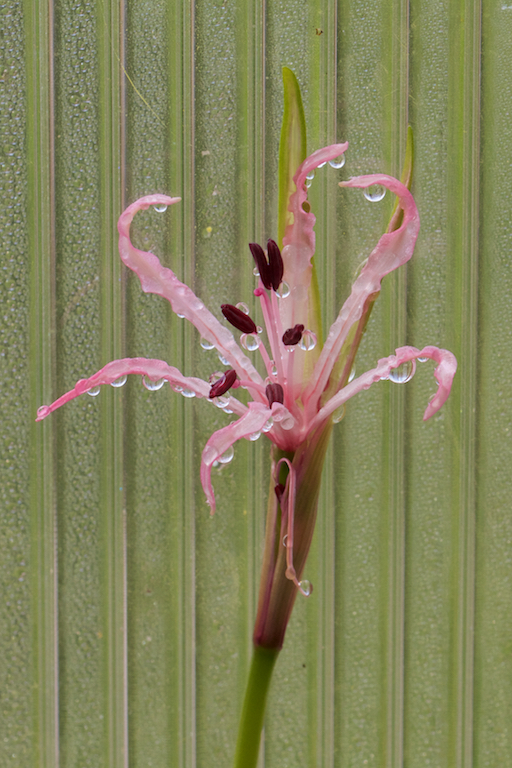
Nerine pudica
This a lovely little South African native that I got as a bulblet from one of Pacific Bulb Society’s bulb exchanges last year.
However, the most dramatic flower in the greenhouse is a very pretty Cypella.

Cypella peruviana
It is also known as Hesperoxiphion peruvianum, how’s that for a mouthful? It is supposed to be marginally hardy in our area so I might try of few of the bulbs outside next year. It seems to be spreading rapidly in the pot. This is a fairly good size flower — similar to a dutch iris — and a wonderful addition to our flower collections.
Yes, yes, lovely photos, but I am looking forward to those from Nepal!
I always love your photos, but this Pomegranate is something else.
I have just discovered a gadget that easily dislodges these beautiful seeds without effort or staining: I highly recommend it since you have your own fruit bearing bush and I’m rather envious!
I have tried several approaches to taking the seeds out. When I’m just adding the seeds to my yoghurt, then I just take a section at a time. If I’m in production mode for a large salad, then those tools can be helpful. I’m definitely going to treat that plant well over the winter…