
Crinum x powellii
A good start for this Garden Blogger’s Bloom Day is the crinum which has been blooming since early july. Although as a plant the crinum is not the most exquisite hortticultural speciment — large strapping leaves and continually expanding its space in the garden — but the individual flowers are lovely.
Another member of the amaryllis family that is popping up right on schedule is what many people call naked ladies.

Lycoris squamigera
We have had a very wet August with many afternoon thunderstorms rolling through.

A wet August leaves everything very lush and green.
In the monument bed we have the last of our lilies. This formosa lily came originally from seed obtained from the Pacific Bulb Society seed exchange.

Lilium fomosanum

Lilium fomosanum
Nearby is a clump of the very pink Allium millenium

Allium ‘Millenium’
A lot of our focus is on the vegetable/flower garden for this season. Every time we visit nowadays the goldfinches erupt from the sunflowers, the hawks make a lot of noise from the surrounding trees, and the butterflies, bees, and hummingbirds are all over the tithonia.

Picking garden is rife with Tithonia

Swallowtail on Tithonia

Sunflowers for the birds

Sunflower (from Autumn Beauty collection)

Sunflowers for the house

Glads brighten up the house

Yet more Glads brighten up the house
The greenhouse still has contributions to the flowerfest. Zephyranthes and Habranthus make a lot of seeds and one needs to pay attention or they will pop up in surrounding pots.

Habranthus tubispathus
The other note for mid-August is finishing the harvest of the garlic.

Northern White Garlic
It was a grand year for the garlic. Of the three varieties we grew, I really like the firm lovely Northern White variety. It’s a hardneck which means that it also contributes scapes in June for the dinner table.
Stay safe and well-distanced.
Garden Blogger’s Bloom Day September 2019

Eastern Swallowtail (Dark Form) on Zinnia
It’s appropriate to feature a zinnia for this Garden Blogger’s Bloom Day post because they are all over the place — in vegetable garden, by the driveway, and in the orchard. It’s hard to disagree with a flower that comes from seed so easily and lasts all season long. In fact zinnias were the first flower we planted when we got inspired to start gardening fifty years ago. We read a book by Jeanne Darlington (Grow Your Own) that led us to scratch a little garden plot next to our student housing. There have been a lot more flowers since …
Typically we have Dahlias and Glads in the vegetable garden just for picking.

Dahlia ‘Bodacious’
And son Josh planted a lot of wildflowers around the property this spring.

California Poppy reblooming
Including especially zinnias and sage in the orchard, but also this particularly pretty variety of basil.

Basil in flower
My eye tends to get distracted by the perennials, especially those that are giving a bonus rebloom.

Daphne x susannae ‘Tage Lundell’

Delosperma congestum ‘Gold Nugget’
There is also a nice little patch of Colchicum in with the wildflowers in the backyard.

Colchicum ‘Byzantium’
As you walk down the driveway it’s hard not to notice the Viburnum with it’s berries hanging out into the drive.

Viburnum wrightii
In the greenhouse I found the Scilla maderensis budding up a few days ago.

Scilla maderensis
And now the flowers are opening up.

Scilla maderensis opening up
This is also the oxalis time of the year.

Oxalis bowiei
One after another, the Oxalis break into bloom from early September into February.
I’ve also found myself reading up about Zephyranthes and their close relatives Habranthus. These are both part of the Amaryllis family and they are spectacularly easy to grow. They are often called rain lilies because the rapid appearance of the flowers in late summer. I’ve had the yellow forms (like Zephyranthes smalli and Z. jonesi, or Habranthus texensis) for a number of years, but what I’m discovering is that the pink and red forms of the family are really special.
This little Habranthus has white flowers that are tinged pink on the outside.

Habranthus magnoi
And these two Zephyranthes are both of the pink persuasion mixed with white.

Zephyranthes miradorensis

Zephyranthes labuffarosea
This last one is especially large for a Zephyranthes. It was found in Mexico on a red mountain, therefore it’s name. Most of the Zephyranthes prefer a southern climate (say zone 8), but they are easy to overwinter in a pot. They make abundant seeds which will start popping up in other pots if you don’t pay attention. I’ve got a number of pots that I thought were tritoma or babiana or some other bulb, only to realize that they were actually Zephyranthes volunteering to use an empty pot.
Garden Blogger’s Bloom Day August 2019

Swallowtail on Tithonia
In the midst of hot days in August it is a reliable pleasure to see butterflies in great abundance throughout the garden. For this Garden Blogger’s Bloom Day posting let me begin with some shots of the butterflies that are everywhere right now in Maryland.

Female Eastern Tiger Swallowtail on Ligularia

Clouded Sulphur on Tithonia
It’s also a good time of year to spot the Hummingbird or Clearwing Moth. They are very distinctive with almost invisible wings as the flit about the flowers.

Snowberry Clearwing Moth on Buddleia
Here are some of the standard flowers around the yard right now.

Hydrangea ‘Limelight’

Gentiana paradoxa

Allium ‘Millenium’

Sage ‘Black and Blue’
And of course the glads are still blooming in the cutting garden.

Gladiolia ‘Princess Margaret Rose’
New for us in the Cestrum that we added this year.

Cestrum ‘Orange Peel’
And a little more unusual is the diminutive Anemonopsis with it’s waxy flowers.

Anemonopsis macrophylla
We also take advantage of the August flowers in the house as well.

Sunflowers live inside too
And then from the greenhouse

Cyrtanthus elatus x montanus
Lastly let me note a seeding success with these hardy camellia seedlings started from seeds purchased from Camellia Forest.

Camellia oleifera seedlings
These should be interesting to grow outside in Maryland.
Garden Blogger’s Bloom Day June 2018
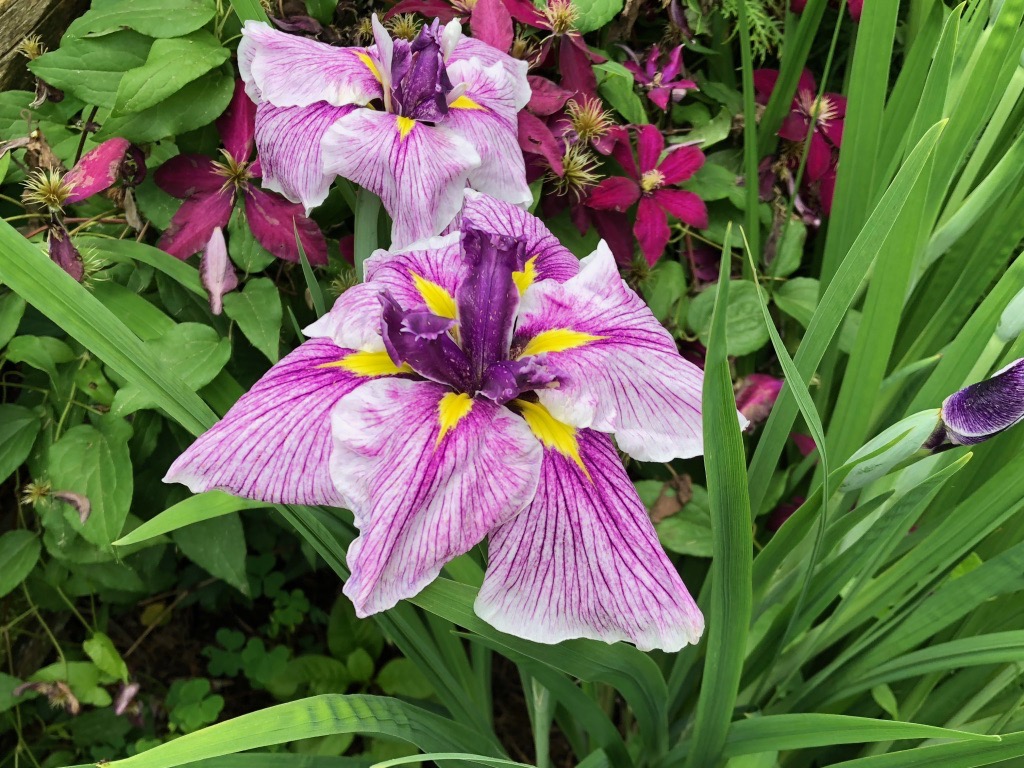
Iris ensata ‘Flashing Koi’
June is a month for spectacular Iris, Clematis overflowing the fences, Roses flowering abundantly and flowers of many kinds reaching fruition. For this Garden Blogger’s Bloom Day, I’ll share some of the things that struck my eye this week.
One of the reasons for growing flowers is to attract the many butterflies that enliven the yard. And what better to grow than the different kinds of Butterfly Weed. The normal Asclepias tuberosa comes without effort in our pasture and feeds the monarchs later in the year. But in the yard we are also growing Swamp Milkweed for different kind of color.

Swamp Milkweed (Asclepias incarnata)
And an extremely heavily flowered cultivar is ‘Hello Yellow’.

Asclepias ‘Hello Yellow’
Here’s the evidence that Butterfly Weed is a good name.

Great Spangled Fritillary on Asclepias
I remembered last year that two of the Arisaemas were very slow to appear, finally showing up on June 2nd. This year Arisaema candidissimum came on May 31 and Arisaema farghesi poked out of the ground on June 2nd again. Talk about reliable.

Arisaema candidissimum

Arisaema candidissimum
Just walking around the yard here are some of the other flowers.

Pink Astilbe

Lilium asiatica ‘Blackout”

Hydrangea ‘Lady in Red’

Clematis ‘Krakowiak
This Clematis is climbing up the huge Black Lace Elderberry.

Clematis climbing the Black Lace Elderberry
In the alpine bed there a couple of lovely gentians that we’ve never grown before. Both are the result of seed exchanges. The Gentiana dahurica is a good 18″ high and spreading, probably to big for the alpine bed in the long run.

Gentiana dahurica
The Himalayan Gentian has the same delicate fringing that I like on other Gentians.

Himilayan Gentian (Gentiana cachemirica)
But it also has multi-colored buds that are lovely even before they’ve opened.

Himilayan Gentian (Gentiana cachemirica)
Nearby is the first blooming of a Stachys that came for seed last year.

Stachys spathulata
And up on the porch is a spectacular bulb from Peru that is a variation on the normal Peruvian Daffodil.

Hymenocallis ‘Sulphur Queen’
I should also note that life is not just flowers at this time of year.

Pea Row is Abundant

A Quick Harvest of Fruit and Veggies before dinner
We’ve been bringing in a steady diet of peas, strawberries, and raspberries. And now the blueberries are about to start.
There is one other flower worth sharing though. For many people the Corydalis lutea is described as a weed, but I find it’s a wonderful fern-like spreading ground cover.

Corydalis lutea
What’s growing in your garden?
Garden Blogger’s Bloom Day June 2017

Anemone multifida ‘Rubra’
I will lead off this very late Garden Blogger’s Bloom Day post with a lovely little anemone that came from the NARGS seed exchange three years ago. It’s not spreading but seems to be holding its own in the Monument bed.
I am always surprised that two of Arisaemas hold off until June. Their colleagues begin back in April. But just when you think that winter has finished them off, the Arisaema candidissimum and Arisaema fargesii come popping up through the ground.

Arisaema candidissimum

Arisaema fargesii
It is also surprising to see the Freesia laxa return every year.

Freesia laxa
According to the books this little corm is not viable in our climate. Not only has it returned but it’s jumped the tracks and moved to another garden bed as well.
I have it growing now next to the reliable Brodiaea ‘Queen Fabiola’.

Brodiaea Queen Fabiola
That’s a white Callirhoe in the front of the image.
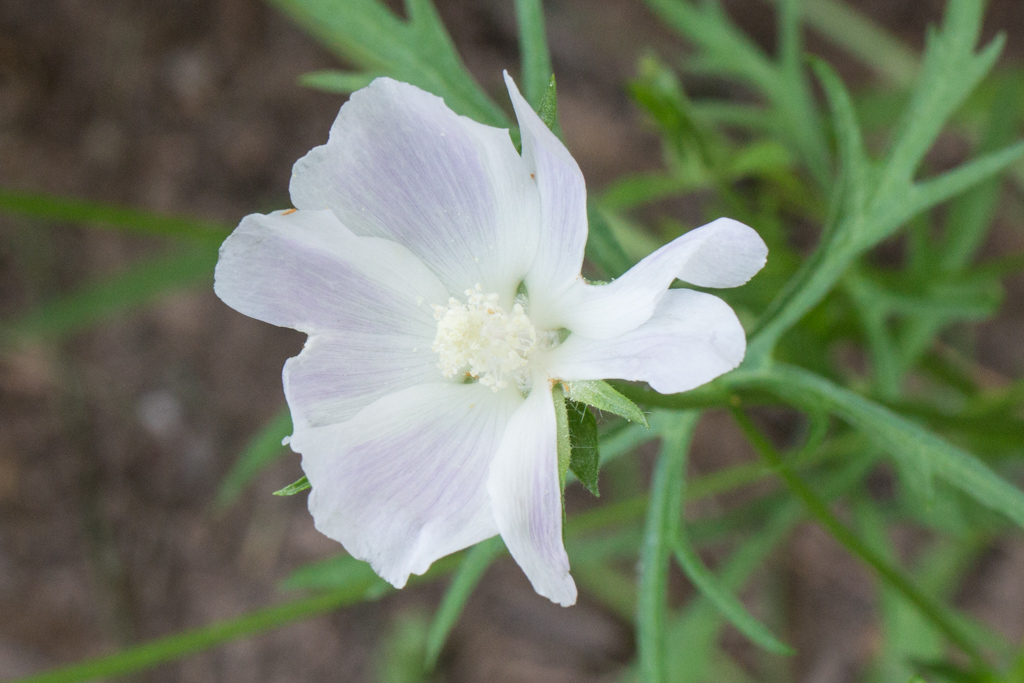
Callirhoe involucrata var. lineariloba ‘Logan Calhoun’
And they all mix together like this.

Star flowers, wine cups and Fressia.
In the same garden bed we have a bright yellow Butterfly Weed.

Asclepias tuberosa ‘Hello Yellow’
This is very popular with all the butterflies and bees. For example this swallowtail was cruising around the yard.

Zebra Swallowtail
Nearby we find a lovely clematis growing up a trellis.

Clematis ‘Krakowiak’
Also by the garage there is a marvelous foxtail lily that came from Far Reaches.
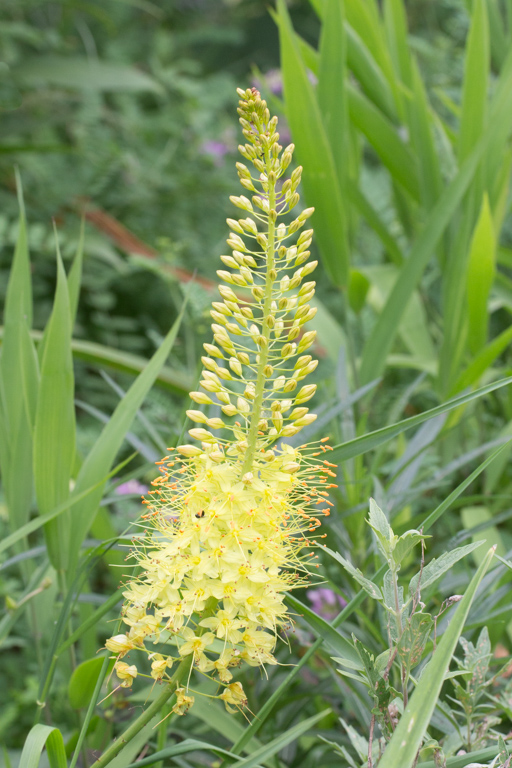
Eremurus stenophyllus
Back in the monument bed there is the first of the Asiatic lillies coming out.

Asiatic Lily ‘Netty’s Pride’
And a chinese ground orchid that is a little taller than our other ground orchids.

Bletilla ‘Brigantes’
Back in the Camellia bed, emerging through the rapidly growing Japanese Anemones is a very pretty Astrantia.

Astrantia ‘Sunningdale variegated’
If we go back to the Alpine bed, as I do several times a day, a very nice dwarf plant in the Campanulaceae is just finishing. I cannot read the label but I suspect it’s an Edraianthus.

Edraianthus sp?
Just finished now is also another pasque flower.

Pulsatilla campanella
Also in the alpine bed is a new gentian that we found at Oliver Nursery this spring.

Gentiana cachemirica
In the greenhouse there are a few picture-worthy objects as well.

Ornithogalum fimbrimarginatum
This is a two-foot tall Ornithogalum that came from the PBS bulb exchange.
Another PBS acquisition is this Pine Woods Lily.

Alophia drummondi (Pine Woods Lily)
I almost forgot to mention the Stewartia. It has been a consistent flowering tree for June 15th. This year it is loaded with flowers but only one is actually open now.

Stewartia japonica
However, life is not flowers alone. It is the peak time for our berries, especially the blueberries.

Blueberries at their peak
It’s a joy picking blueberries. We brought in gallons last night. I’m convinced the only reason we can do so is that just behind the garden we have a very large mulberry tree and an equally large Bird Cherry that provide even greater interest for the birds.

Wild Cherry (Prunus avium)
Speaking of birds I’ve seen some really nice ones on my early morning bird watching including this Baltimore Oriole yesterday.

Baltimore Oriole eating cherries
Well, that’s a glimpse of our garden right now. What’s happening in your garden?
Garden Blogger’s Bloom Day September 2016

Nasturtium
It has been a generally hot and dry (read depressing) summer for our garden). In early August we awoke to find that we had drawn down the well with watering and so had to forego our normal watering plan. So my looks around the garden prior to Garden Blogger’s Bloom Day were fewer than they might otherwise have been. We did still water Beth’s new raised bed and the Nasturtiums and Calendulas have responded by blooming all summer long and into the Fall.

Calendula
Many of the other flowers in bloom are a testament to how well some species can survive in adversity.

Alstroemeria ‘Sweet Laura’

Garlic Chives (Allium tuberosum)
Venturing out onto our ultra-dry hillside which never gets watered at all anymore, I found several champions of the survival school.

Buddleia

Russian sage (Perovskia atriplicifolia)

Crepe Myrtle

Helianthus ‘Lemon Queen’
Notice the spider on the Lemon Queen and it’s very adaptive coloration.

Spider on Lemon Queen
The butterflies are also very attracted to Lemon Queen.

butterfly on Lemon Queen
I also saw a lovely Monarch Butterfly on the Tithonia in the vegetable garden.

Monarch on Tithonia
One very noteworthy Fall-blooming flower is the Sedum ‘Autumn Joy’. I’m becoming more of a fan every year and it’s a good thing because it keeps spreading of its own volition.

Sedum ‘Autumn Joy’
Another fall bloomer was a bit of a surprise. This Sweet Autumn Clematis was something I pulled out three years ago and I was surprised to see it return in two separate places this year.

Sweet Autumn Clematis (Clematis terniflora)
It’s a lovely flower but can get too aggressive if left to its own devices. I will probably try to transplant it to the woods.
In the alpine beds I have two erodiums that are returning to bloom right now.

Erodium chrysantha

Erodium
In the greenhouse I have just finished restarting all the oxalis. At the same time the Bulbine has come back into flower.

Bulbine frutescens
And one of the cyclamens has taken on a very distinctive flowering by simply spilling over the edge of the pot with a great many flowers and no leaves at all.

Cyclamen graecum
Lastly just to note that man (or woman) does not live by flowers alone. The raspberries are joining the apples as delectable fruits to be harvested this month.

raspberries ready for harvest again
Garden Blogger’s Bloom Day August 2015
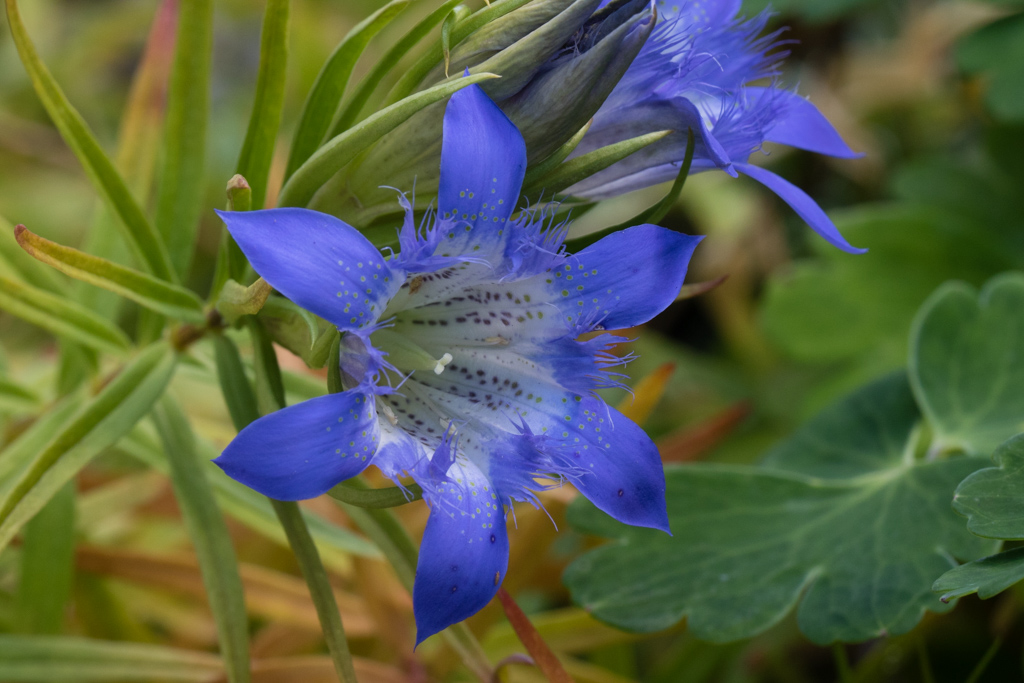
Gentiana paradoxa
Well I have very mixed feelings for this Garden Blogger’s Bloom Day. There are a few flowers like the beautiful gentians in the alpine bed. But it is also the dog days of August with over a week since the last rain and no rain in the immediate future. On top of that we returned from vacationing on Cape Cod to find that the water pump had stopped a week ago and all the elaborate water timing I had set up was a total fail. It was bad enough for the outdoor plants surviving the drought-like conditions, but the worst casualty was the greenhouse. With no water the greenhouse becomes an oven. I can’t even bear posting the picture of what the greenhouse looks like. The bulb things will survive but the alpine seedlings that were painstakingly started this year were devastated. Focusing on the positive, there is a splendid Cyrtanthus hybrid which found the desert-like conditions just to its liking.
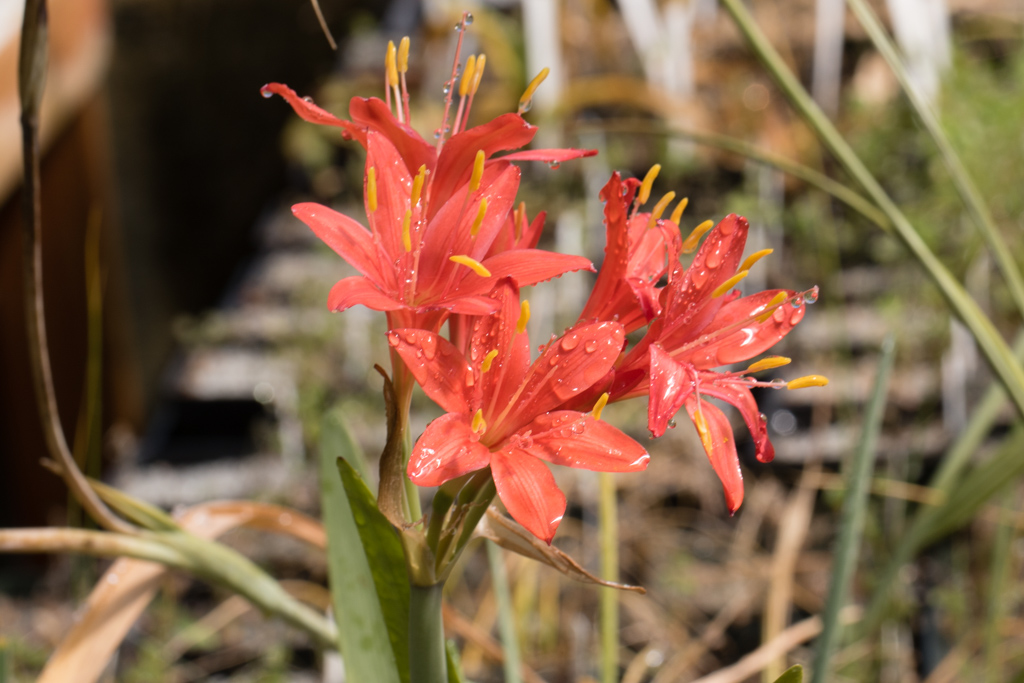
Cyrtanthus elatus x montanus
Another little bulb in flower right now is a Barnardia from Japan.

Barnardia japonica
Out in the very dry yard, the first thing that strikes you as it hangs over the porch is a lovely Limelight Hydrangea.
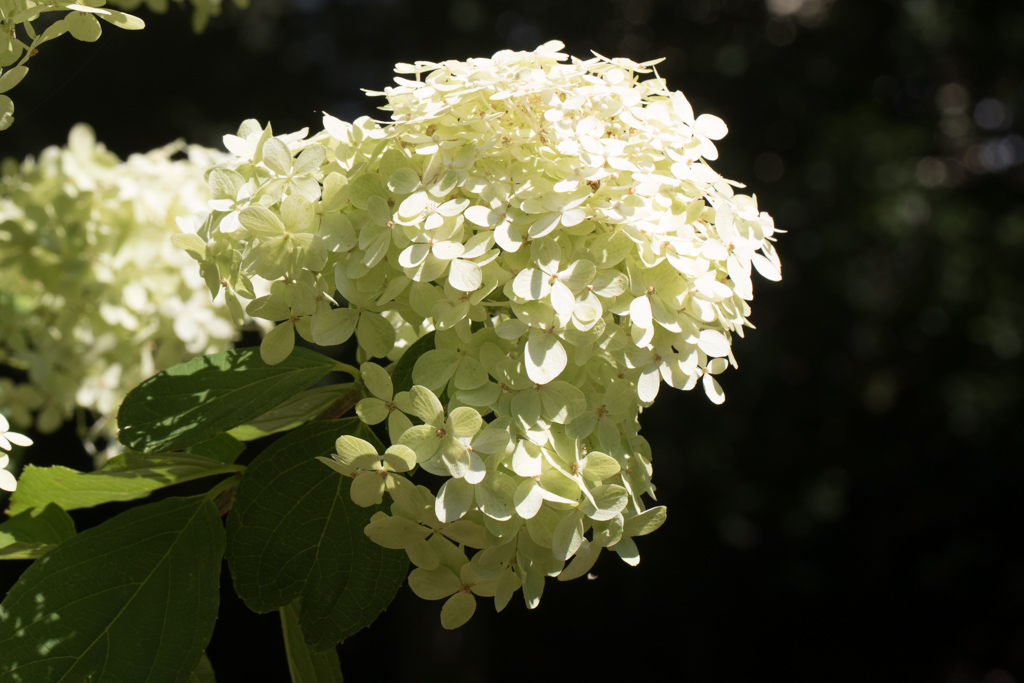
Hydrangea ‘Limelight’
In the perennial beds there are two very striking lobelias that capture one’s attention.
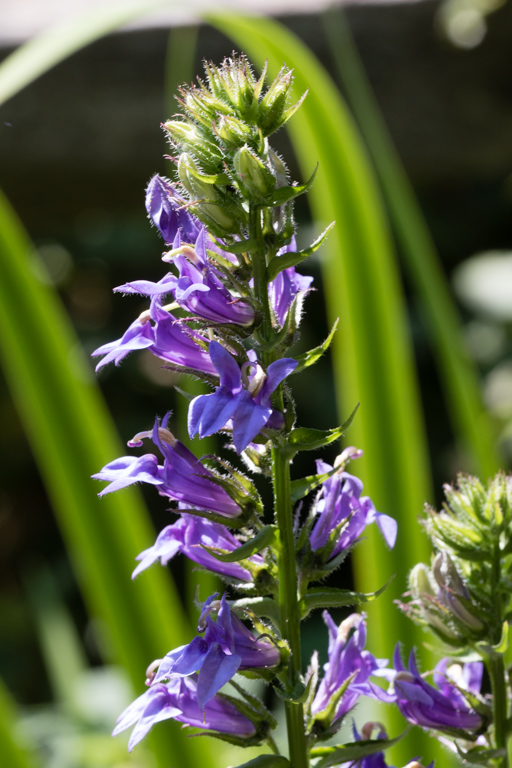
Great Blue Lobelia (Lobelia siphilitica)

Lobelia x speciosa (Compliment Deep Red)
This one was brought up from Plant Delights this spring.
There is also a cute little Rosularia from Wrightman Alpines that I noticed flowering on one of the pieces of tufa.

Rosularia sedoides
There are lots of annuals that give us picking flowers for inside the house. I noticed a clearwing moth hanging on one of the verbenas.

Clearwing Moth on Verbena
For the annual flowers in the garden the Mexican Sunflowers have totally dominated over the zinnias, marigolds, cosmos, etc.
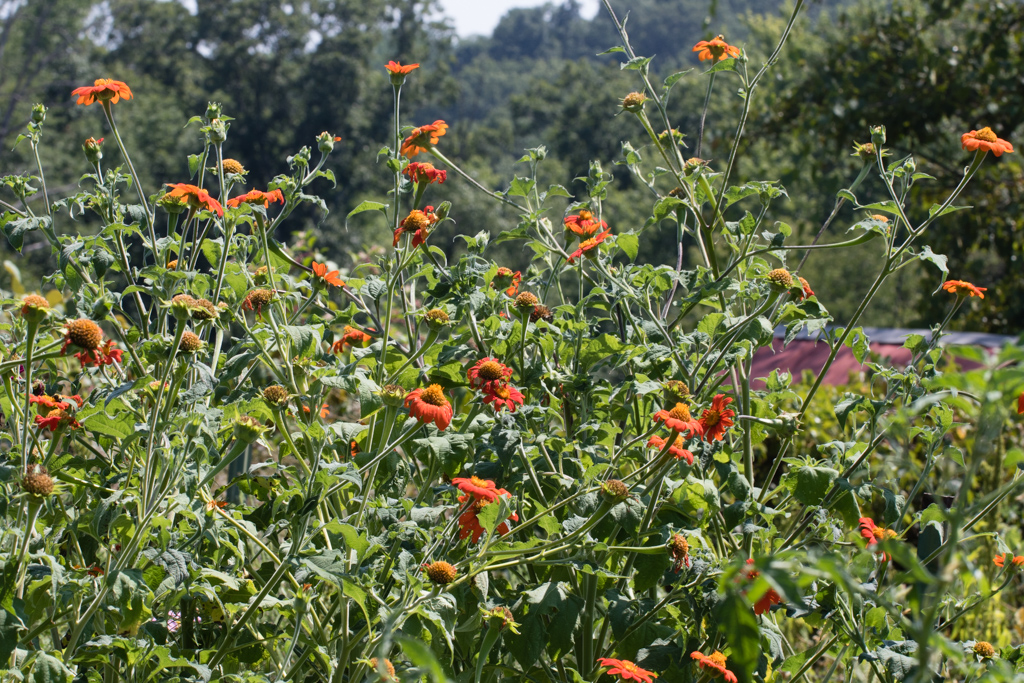
Tithonia dominating annuals
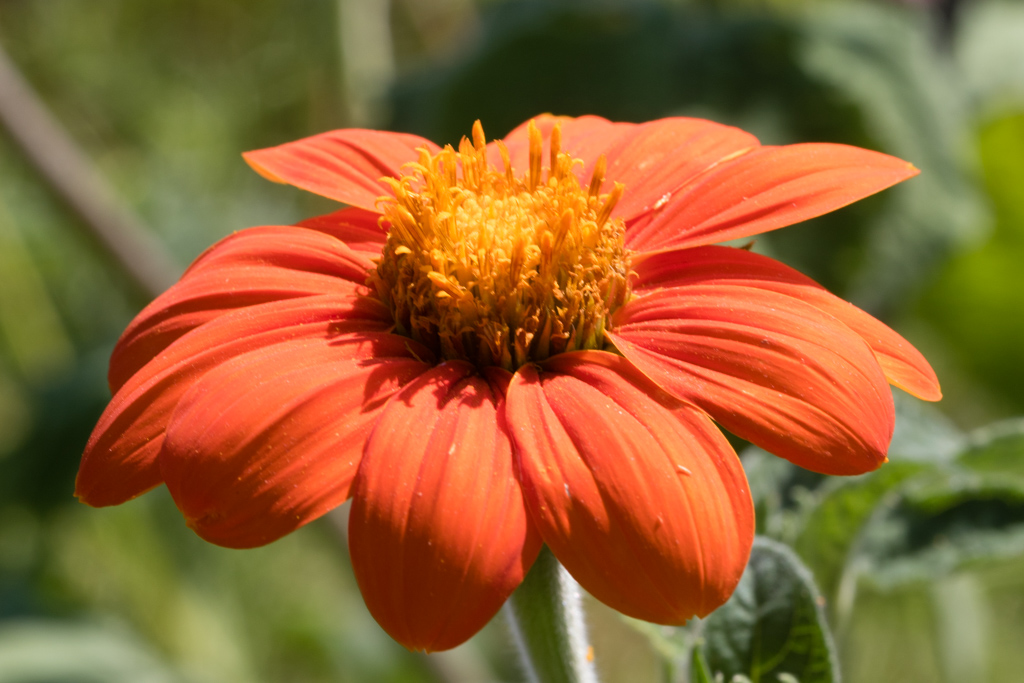
Mexican Sunflower (Tithonia rotundifolia)
A Link to Nepal

View of the mountains from the road between Pokhara and Kathmandu
Nepal is an incredibly rich and diverse country with a landscape that ranges from the jungles of Chitwan on the Indian border to the highest mountains in the world. In between are all stages of beautiful rivers and terraced hillsides. There are 6000 species of flowering plants, 900 species of birds, and over 600 species of butterflies. But even with all of that diversity it was the wonderfully friendly people that left us with indelible memories. Their small land accommodates a great many cultures and traditions but seems to rank tolerance very high on their scale of values. I’ve put on SmugMug a set of our images from 3 weeks in Nepal. Here are a few samples.

A young mother who was happy to have me photograph her child

Little girl at Boudhanath Stupa
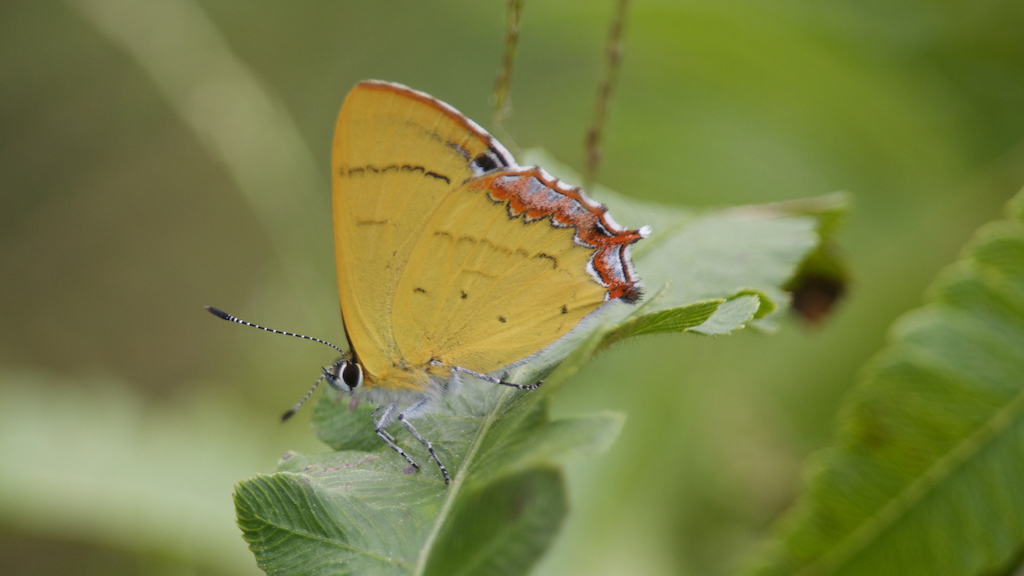
Green Sapphire, Heliophorus androcles, wings closed

Baby Elephant in elephant grass
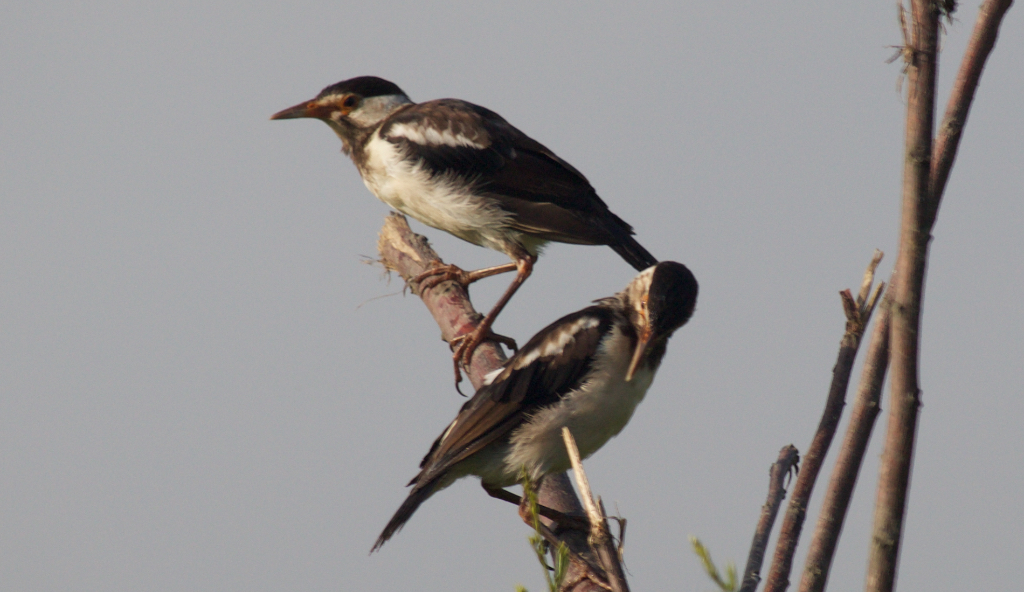
Asian Pied Starlings
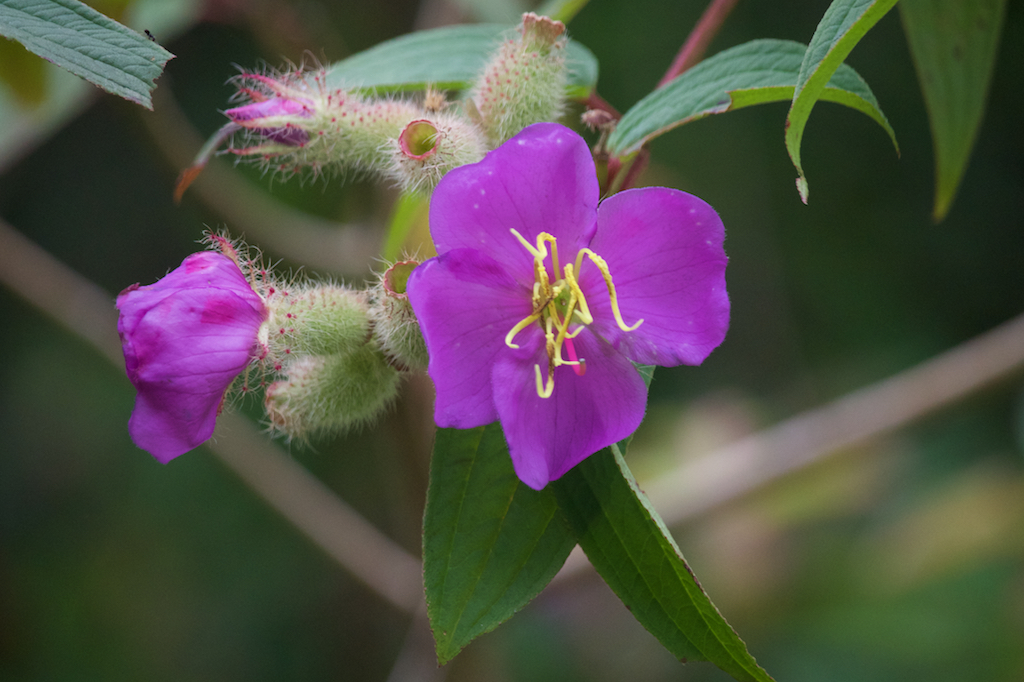
Osbeckia stellata

Annapurna South reflection